
Roadtrip to Muscat & Nizwa
December 2021
Oman is the oldest continuously independent state in the Arab world. Located near the mouth of the Persian Gulf, it borders Saudi Arabia, United Arab Emirates, and Yemen. We set off from Dubai on a three-day road trip through central Oman, exploring its stunning landscapes, dramatic wadis, and historic cities rich in heritage and culture. Muscat, the capital, marked the furthest point of our journey.
Our itinerary
Day 1: Dubai - Muscat (450 km) (via border crossing Hatta) (overnight Muscat).
Day 2: Muscat - Sultan Qaboos Grand Mosque (17 km) - Birkat Al Mouz (131 km) - Nizwa (22 km) - (Wadi) Tanuf (23 km) - Misfah Al Abriyeen (37 km) (overnight Misfah).
Day 3: Misfah Al Abriyeen - Nizwa (58 km) - Wadi Ghul (60 km) - Jebel Shams (half way) (40 km) - Dubai (via Jebel Kawr off road track, 4x4 needed) and border crossing Al Ain (Mezyad) (380 km). Total km: around 1,220.

Visa

Oman offers visa-free entry for up to 14 days to most nationalities, including Schengen passport holders.
If your nationality is not included in Oman’s visa-exempt list, you will need to apply for a visa (or e-visa) before you travel. This can also be arranged at the Omani border.
NOC & insurance

Tourists need to arrange with their rental car a 'No Objection Certificate' (NOC) to cross into Oman via the Al Mazyed border post (Al Ain).
✅ NOC fee: AED 550 + VAT (validity: 7 days)
⚠️ Insurance for Oman is not included in the rental — you will need to purchase it at the Omani border upon entry.
4x4 vehicle

To drive into wadis, such as Wadi Tanuf and Wadi Ghul (The Omani Grand Canyon), you will definitely need a reliable 4WD vehicle for safety.
Autostrad Rent A Car, based in the UAE, offers 4x4 rentals for tourists, including the option to cross the Oman border. They also help arrange all required documentation, such as the NOC.
Our highlights

Muscat
Muscat is Oman’s coastal capital, known for its mountains and whitewashed buildings. Sultan Qaboos Grand Mosque is its iconic landmark, famous for its Islamic architecture.

Birkat al Mouz
Birkat Al Mouz is a historic village known for its mudbrick ruins and lush date plantations. Its ancient falaj irrigation system is recognized by UNESCO as a World Heritage site.

Nizwa
Nizwa is known for its cultural heritage and fort, famous for its massive circular tower and broad views. The Souq offers a glimpse into Omani culture and daily life.

Wadi Tanuf
Wadi Tanuf is a scenic valley known for its village ruins set against rocky mountains. Its ancient falaj irrigation system reflects the Omani traditional water management heritage.

Misfah
Misfah al Abriyeen is a picturesque mountain village known for its traditional mud-brick and lush terraces. Its ancient falaj irrigation system reflect traditional Omani life.

Wadi Ghul
Wadi Ghul canyon is known as the 'Grand Canyon of Oman', carved deep into the Hajar Mountains. It offers breathtaking cliff views. Driving into the wadi is breathtaking.
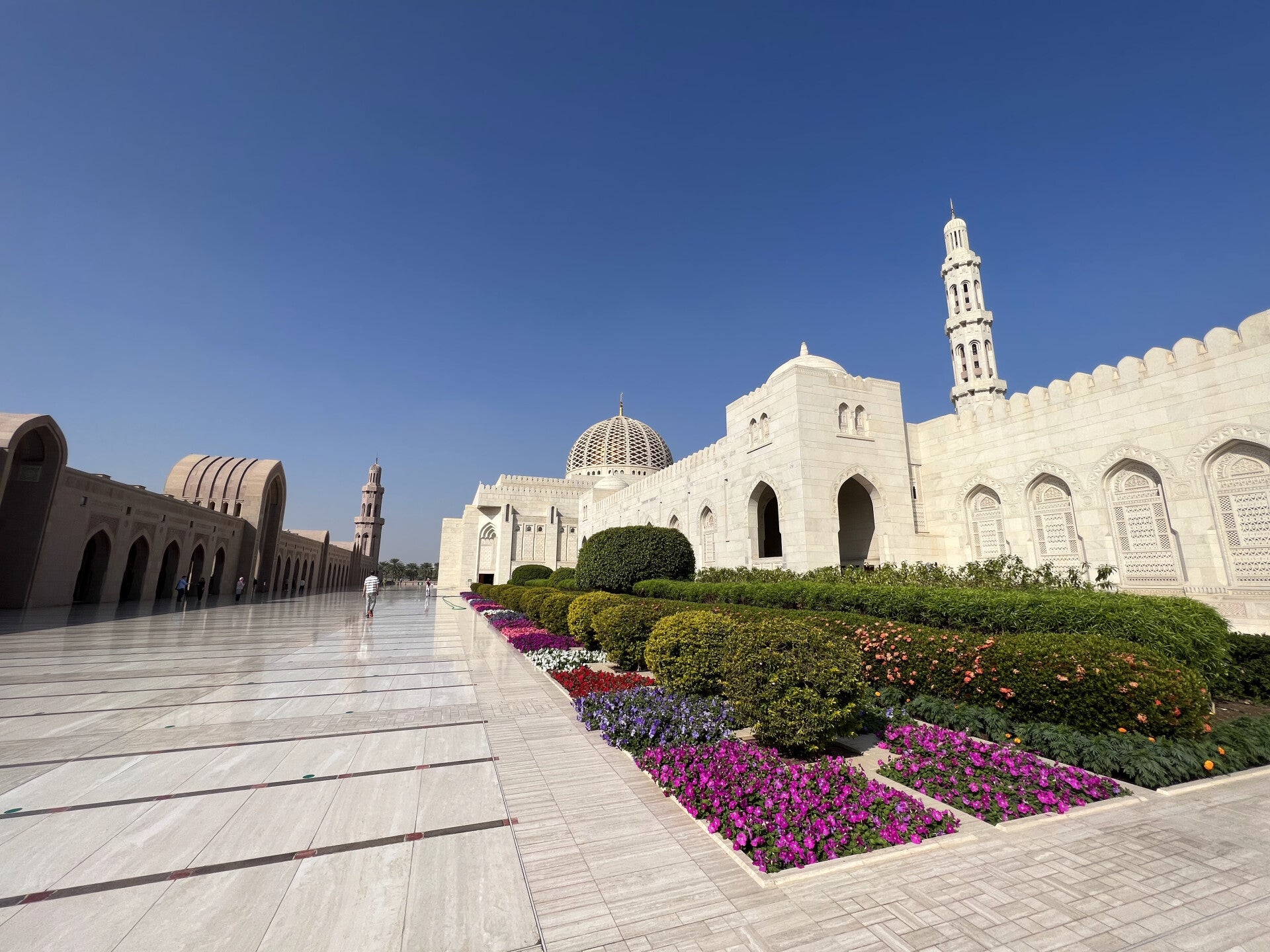
Sultan Qaboos Grand Mosque
Travel Journey
Here's our day-by-day journey as we wandered through new landscapes, discovered hidden gems, and immersed ourselves in the sights of each place.
Day 1: Muscat Al Mouj (Muscat Marine)
It was a National Public Holiday, and we decided to spend the extended weekend in Oman. We left Dubai early and crossed the border at Hatta. This went smoothly, taking about 45 minutes in total. After a long but beautiful drive of about 450 km, with several stops along the way, we arrived in Muscat.

The first night, we rented an apartment in Muscat, Al Mouj, wich is a trendy destination west of Muscat center. We enjoyed dinner at one of the charming local restaurants and took a leisurely stroll around the marina.

Day 2: Sultan Qaboos Grand Mosque
Next day, we visited the Sultan Qaboos Grand Mosque of Muscat, which is a stunning example of modern Islamic architecture in Oman. It features one of the world’s largest hand-woven carpets and an impressive crystal chandelier. We strolled across the mosque’s impressive and expansive grounds and felt a wonderfully serene calm.

Birkat Al Mouz (Mawz), three villages and seven watchtowers
After this visit, we hit the road again to Birkat al Mouz. We’ll have to return to Muscat another time to explore more.

Birkat Al Mouz brings you back in time. Located on the way to Jebel Akhdar, it is one of the most famous ruin-villages in the Sultanate of Oman. The ancient village consists of two sets of ruin sites, but there must have been a third site. The villages were once home to the tribes who lived in those mountains, such as the The Bani Riyam Tribe, who controlled the Hajar mountain region. The houses are made of gray carbonate rock. The three villages and seven watchtowers are now mostly in ruins, however a few resilient occupants still live in older parts of the village.
What happened?
In 1959, following a half-decade long Jabel Ackdar War between the local Imans backed by Saudi Arabia, and Sultan Said bin Taimur, Birkat Al Mouz and several older villages were bombed by the British R.A.F. in support or the Sultan. In Birkat al Mouz, the destruction included the damage and ultimate abandonment of the palace built by the leader of the rebellion, Sheikh Suleyman bin Himyar. fortunately, the bombing was not the end of Birkat Al Mouz. Other villages to the west, such as Tunuf, were not so lucky, the bombs completely destroyed the village. Birkat Al Mouz is not touristic at all, we could just walk into the village and it was just breathtaking.
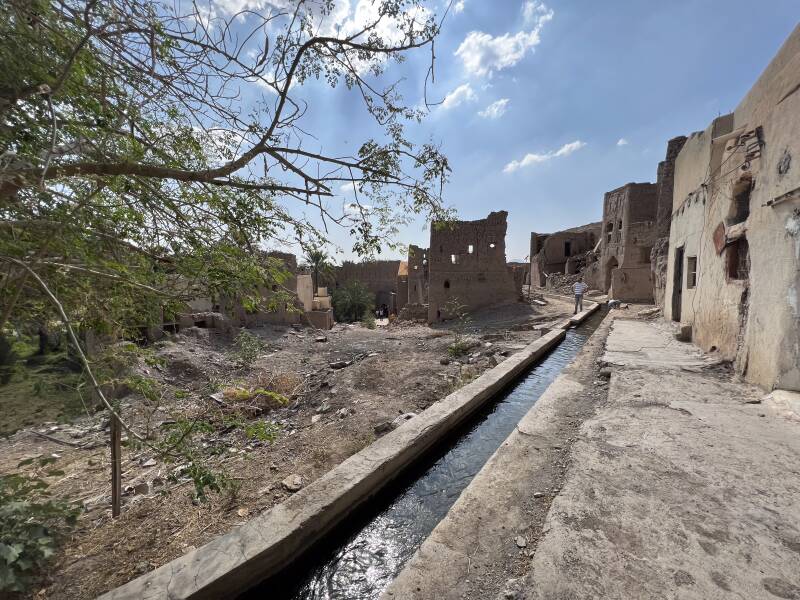
We could just walk around and discover the clay houses with several levels. We were surprised by all the details still present such as ornaments, windows, paintings ... it is just so gorgeous! We loved this place.
Falaj irrigation system
Everywhere in the village, we saw the irrigation system. This region is known for its abundant water and therefore the existence of all the greeneries, the banana and date farms. The presence of the Falaj irrigation system of Birkat Al Mouz and its position in the Jabel Ackdar region, facilitated the survival of the villages and the farms. Nowadays, there are still some large banana plantations which create a beautiful scenic environment. The old Falaj irrigation system at the at the ruin site is also listed as UNESCO World heritage.
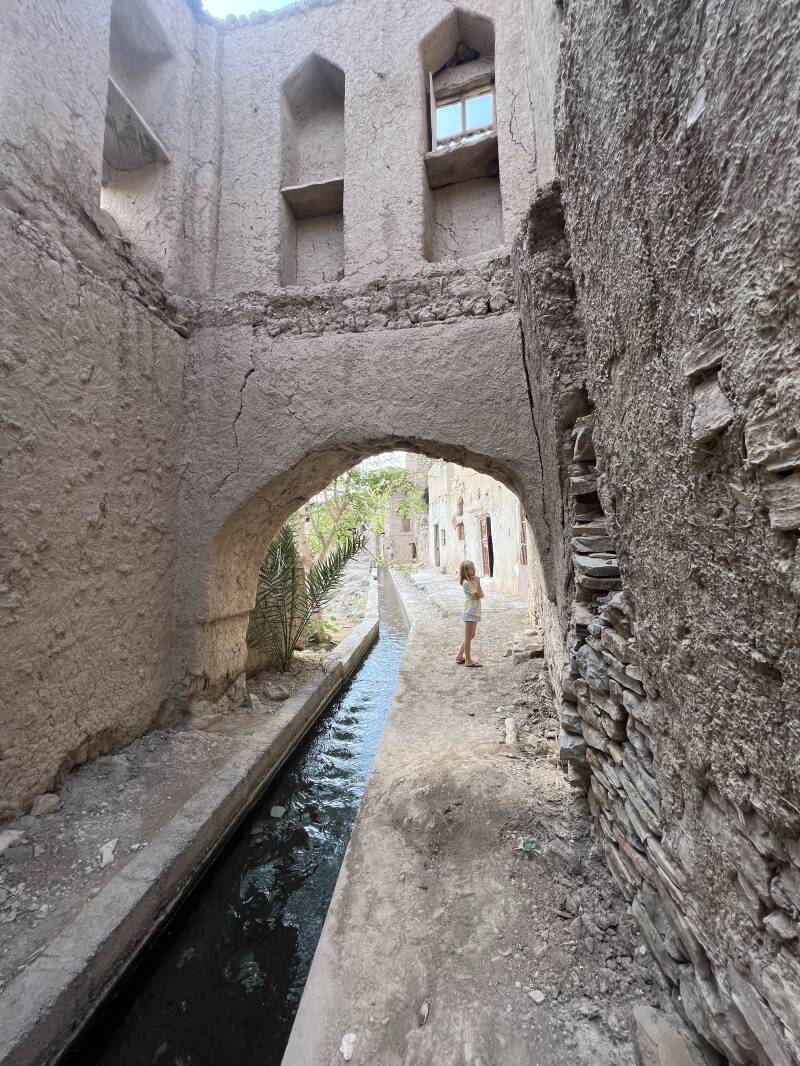
The second village
The views of the mountains and the plantations were inspiring. As you can see below, from there you can see the ruins of the other tribe from Birkat Al Mouz and one watchtower.


Birkat al Mouz


The Journey Continues: Nizwa
After Birkat al Mouz, we continued driving to Nizwa, where we arrived around lunchtime. Nizwa is among the oldest and most historically significant cities in Oman. For centuries it functioned as a major center of trade, religion, education, and artistic activity within the region. At the heart of the city stood its great mosque (Jama), which served as an important hub for Islamic scholarship and religious instruction.
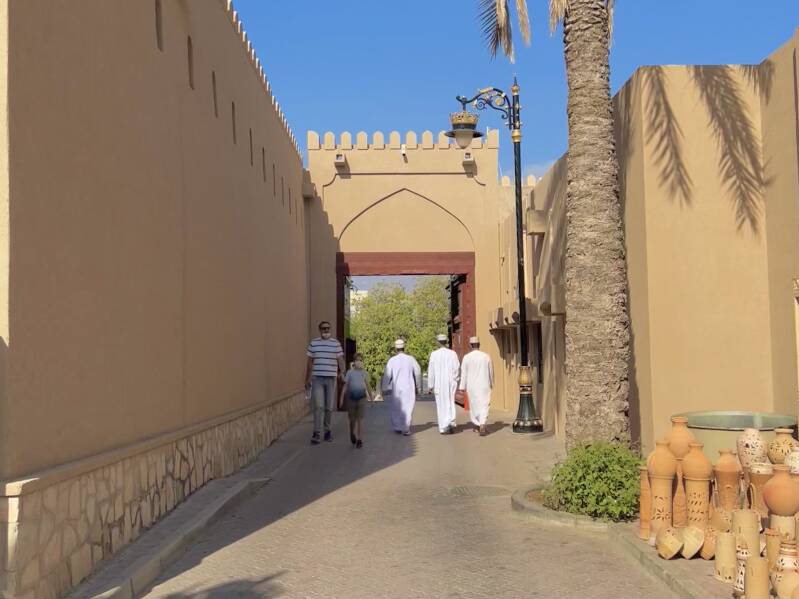
Because of this central position, merchants, travelers, and scholars frequently passed through the city, and a large portion of the country could be accessed from Nizwa. This made Nizwa both a cultural and religious hub, as well as an important trading center.

Lunch time
By then we had started to feel hungry, so we went looking for a small place to eat. Everything was quite traditional, and we chose a Chicken Mandi, a traditional Yemeni dish that is popular throughout the Gulf region.
A beautiful old town to get lost in
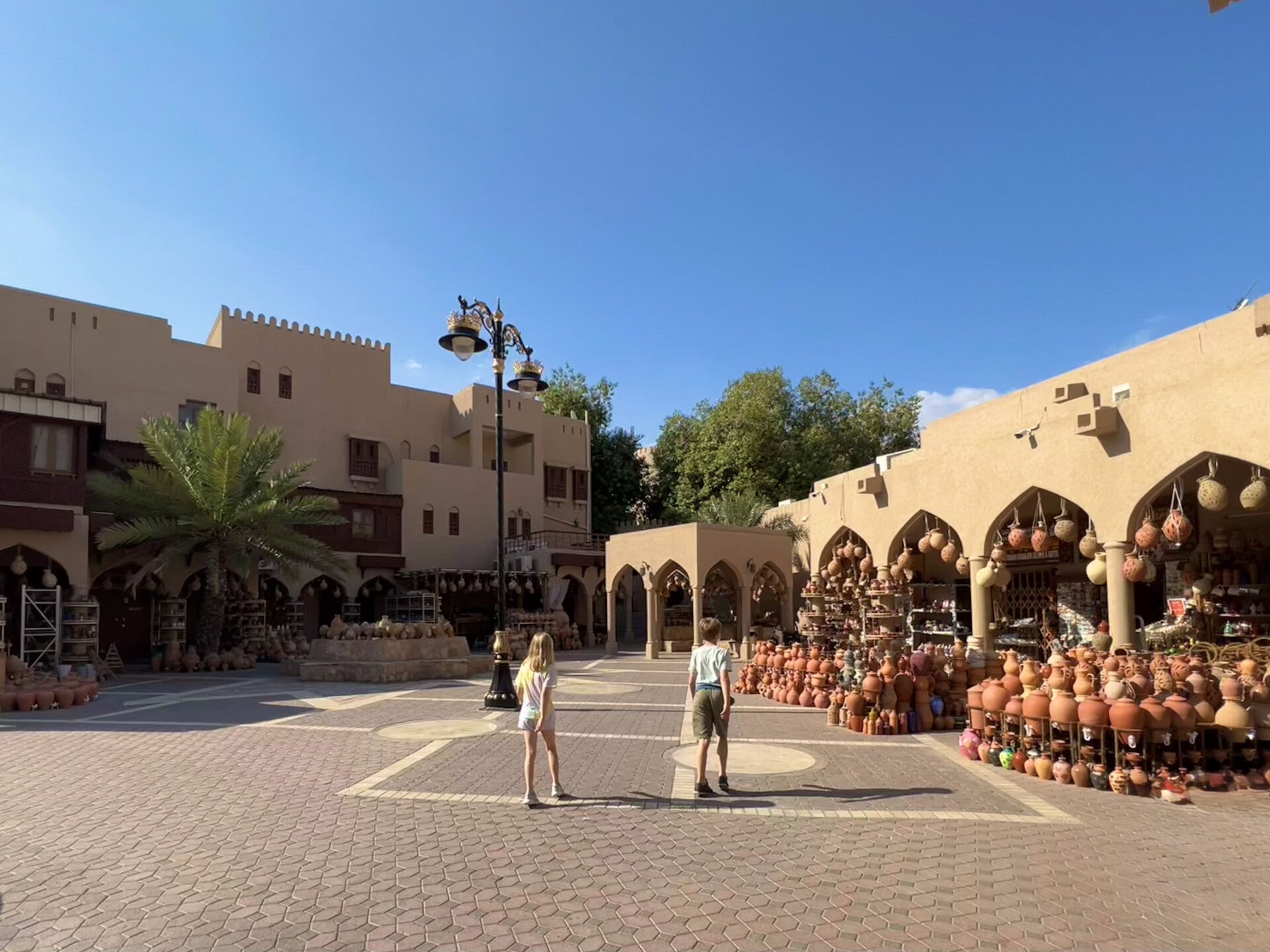
After lunch, we set out to explore Nizwa, and strolled through the narrow streets in the historical part of the city. In the souq of Nizwa, traders sell dates, spices, handicrafts, and other local products, while the famous Friday livestock market draws people from villages across the region. This lively mix of heritage, agriculture, and commerce makes Nizwa a place where Oman’s past and present come together.

Nizwa fort
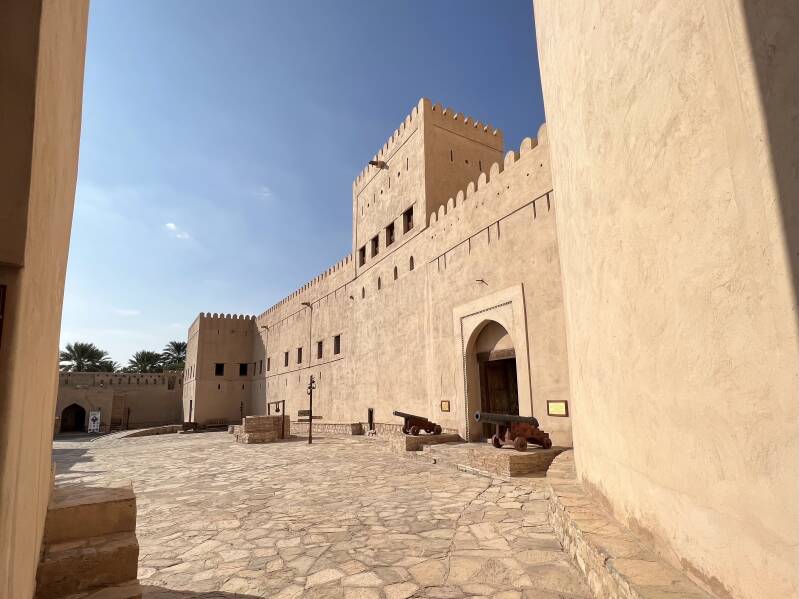
We visited the Nizwa Fort, one of Oman’s most famous historic landmarks, built in the 17th century by Imam Sultan bin Saif Al Ya’arubi. Its massive circular tower and defensive design once protected the city and controlled important trade routes through the region. This landmark is an important reminder of turbulent times in Oman's history.
Traditional pottery
Nizwa is also well known for its traditional pottery, which has been practiced in the region for generations. Local craftsmen produce a variety of clay items using traditional techniques that have changed little over time. Among the most characteristic pieces are clay cups or goblets, which are often simple in design but valued for their craftsmanship and cultural significance. They reflect the long-standing craft traditions of the region and form part of the cultural heritage that makes Nizwa such an important historic town in Oman.



Nizwa


Tanuf Castle Ruins
We continued to Tanuf. First thing we see were the Tanuf Castle Ruins, they were once part of a lively and fully functioning village, inhabited by the ancestors of the present-day residents of Tanuf until the 1950s. The village was severely damaged during the Jebel Akhdar War, after which it was gradually abandoned. Today, only the stone houses, narrow alleys, and remnants of the settlement remain, giving visitors a glimpse into the past.
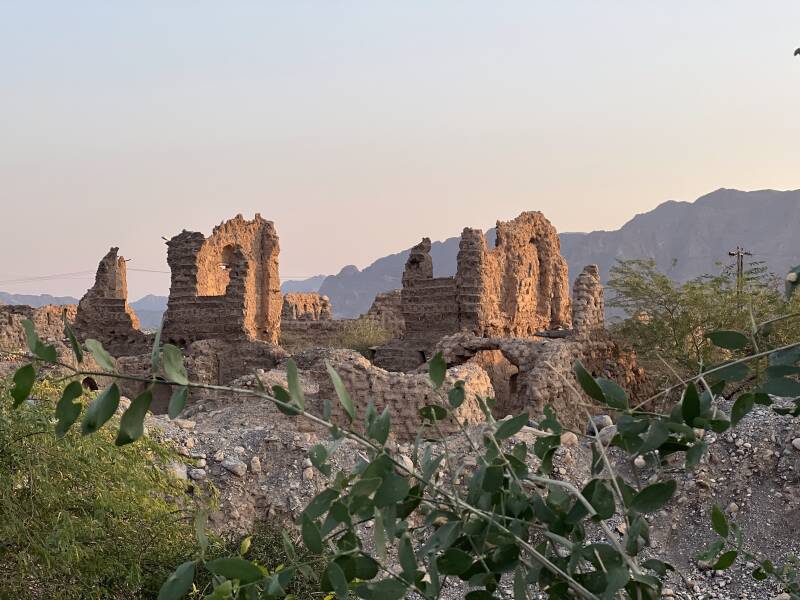
The ruins themselves are spread across a small hillside, with crumbling walls, old doorways, and roofless houses built from local stone and mud. Walking through the remains, it is easy to imagine what daily life once looked like here—families living close together, children playing in the narrow paths, and farmers tending their terraces.

Today, Tanuf Castle Ruins are a wonderful place to explore, learn about Oman’s history, and take memorable photographs.
Falaj irrigation system
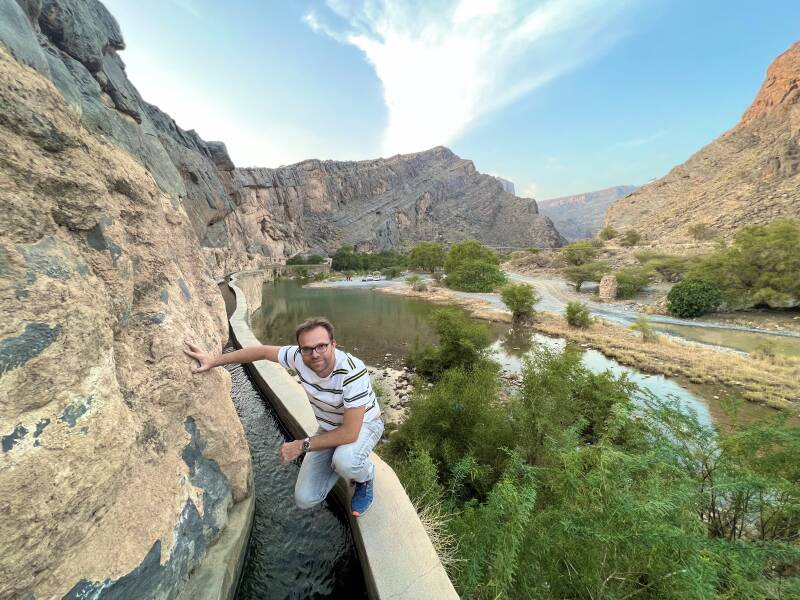
One of the most fascinating features of the old village is its traditional irrigation system, known as the Falaj irrigation system. This ancient network of channels once carried water from nearby springs through the village and into the surrounding fields, allowing residents to grow crops in an otherwise dry environment. Parts of this system can still be seen today, quietly telling the story of how water shaped life in the settlement.
Wadi Tanuf
Nearby lies the beautiful Wadi Tanuf, a dramatic valley surrounded by rugged mountains. During the rainy season, water flows through the wadi, feeding the falaj and bringing life to the area. Even when dry, the wadi offers impressive scenery, rocky formations, and peaceful walking routes.
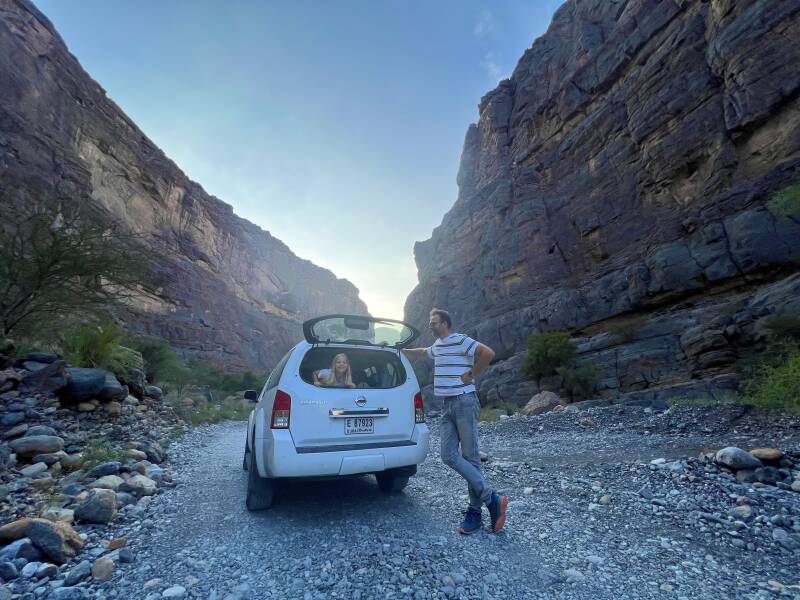
To drive into the wadi, we first had to pass through a flood. As we continued deeper into the wadi, the gorge between the mountains became narrower and more impressive.
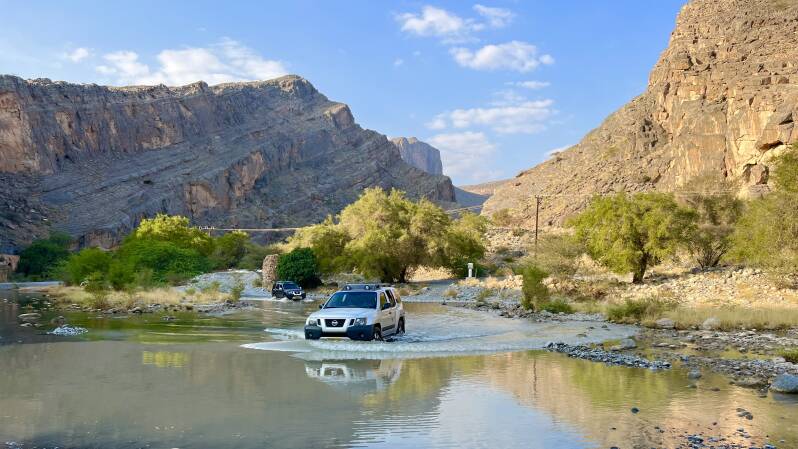
Here and there we were still able to step into small pools of water, like miniature wadis, with our feet. We enjoyed a fantastic drive and the beautiful natural surroundings.

The combination of historic ruins, traditional irrigation channels, and the striking landscape of the wadi made Tanuf a unique and atmospheric stop.

Misfat Al Abriyeen
Misfat Al Abriyeen
Our final stop of our day was Misfat Al Abriyeen, a historic mountain village that is believed to be around 300 years old, although the area itself has likely been inhabited for much longer. Settlers established the village centuries ago after discovering a natural water source in the mountains, allowing them to create a small oasis in an otherwise dry landscape.
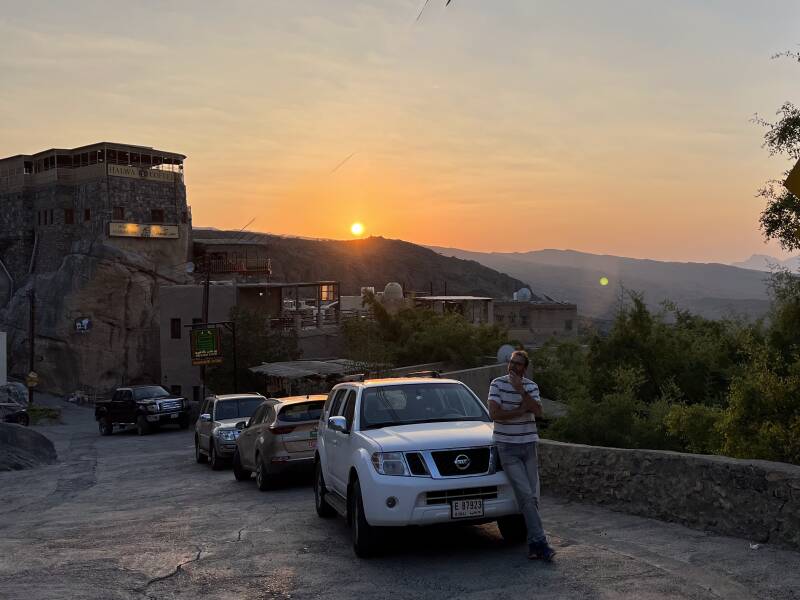
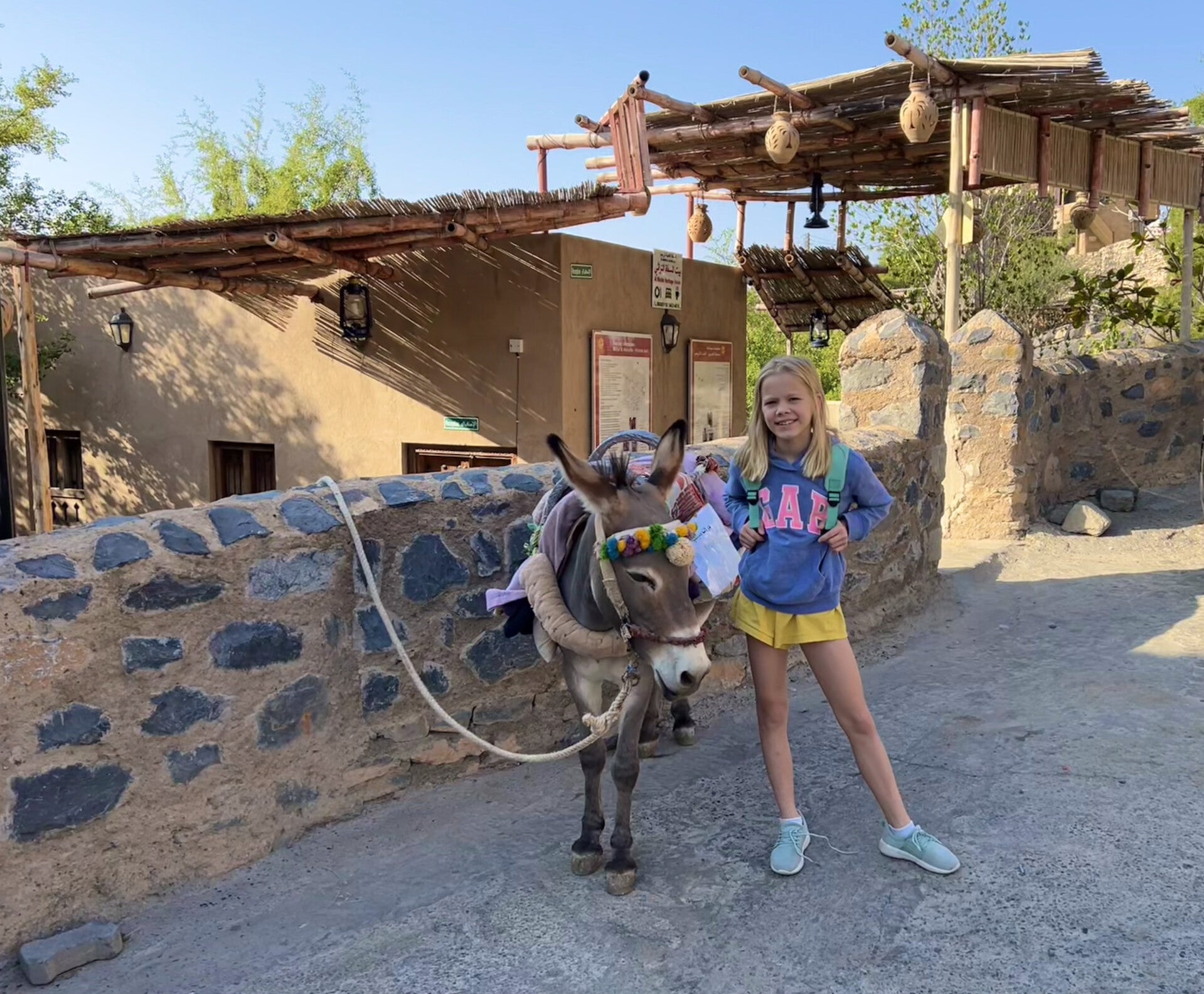
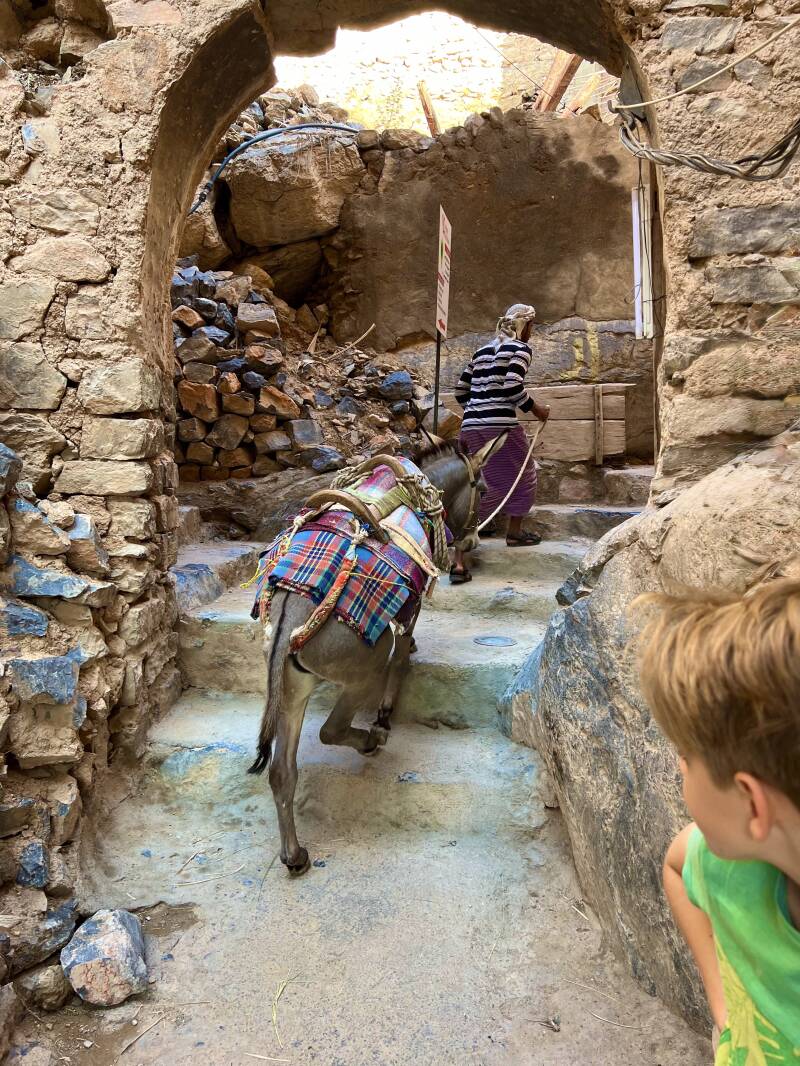
When we arrived, the sun had just set, and with the little daylight that was left, we found our way to our guesthouse. Since cars are banned in the center of the village, that was quite a challenge. If you want, you can “order” a donkey to carry your luggage to your hotel. We were stubborn, and with our daypacks, we made our way through all kinds of narrow streets, little passageways, and steep stairways going down. Loved it!
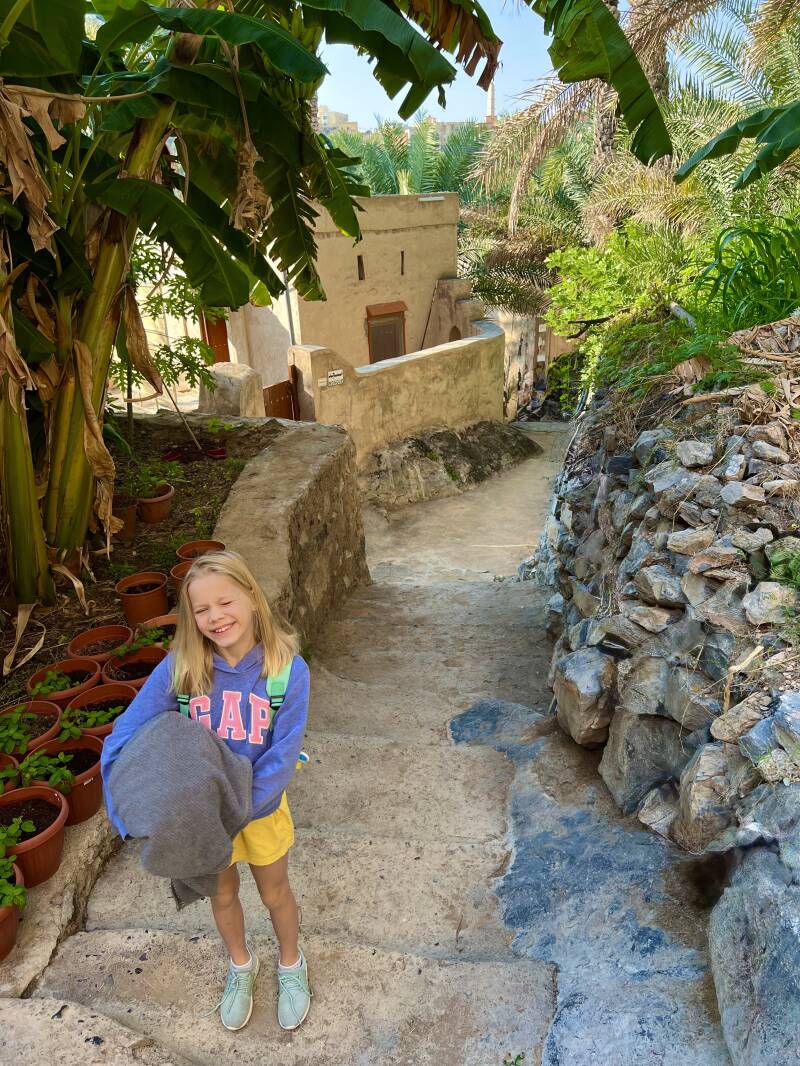
Because of the darkness, we couldn’t capture this properly in a photo. The picture above was taken the next day, when we checked out and walked back to our car.

In the evening, we joined the house for dinner. A live-cooking BBQ had been prepared for us, with something for everyone. We finished with tea and sweets. Exhausted from a day of exploring, we went to bed nice and early.
Day 3: Morning stroll
The next morning we were already awake early, and we set out on foot to watch the sunrise. Walking through the cobbled streets and ancient pathways gives a real sense of stepping back in time.

Narrow passageways and winding stone staircases connect the different levels of the village, creating a charming labyrinth that invites visitors to explore.

One of the most striking features of Misfat Al Abriyeen is its traditional mud-brick houses, many of which have stood for hundreds of years. Built from local materials such as mud, stone, and palm trunks, these houses demonstrate the remarkable durability and clever design of traditional Omani architecture. The thick walls help keep interiors cool during the hot summer months while retaining warmth in the cooler mountain evenings.

The village is relatively small and peaceful, with a population of roughly 1,000 residents. Many of them still maintain traditional ways of life, including farming the terraced fields and caring for the irrigation channels.
Falaj irrigation system
That brings us to the irrigation system, which we came across while walking. This traditional falaj irrigation system seems to be over 2,000 years old.It is a brilliant irrigation network that made it possible to cultivate the steep slopes, turning the area into fertile agricultural terraces.

Because the village is built on the side of a steep mountain, its pathways climb gradually upward to higher levels. As we walked through the terraces and along the ancient falaj irrigation channels, we were rewarded with spectacular viewpointsover the surrounding valleys and mountains.
From these vantage points, the landscape stretches for miles, offering breathtaking scenery and a glimpse of the harmony between nature, water, and traditional village life that has defined Misfat Al Abriyeen for centuries.
Essentially, it is a winding channel carved into the mountainside that carries fresh spring water from higher up the mountain down to the terrace gardens, where dates, mangoes, and other trees are grown.
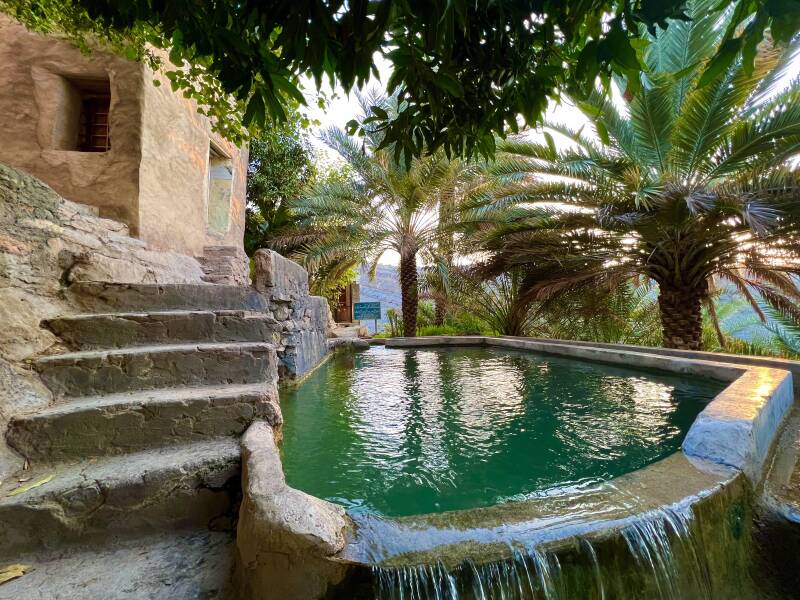
Even today, Misfat Al Abriyeen remains a beautiful oasis village, known for its lush terraces filled with date palms, banana trees, and other crops. The greenery contrasts strikingly with the surrounding rocky mountains that rise to about 1,000 meters above sea level.
Our stay at Misfah Old House
We stayed at a traditional Omani House, which gave us a wonderful opportunity to experience the authentic atmosphere of village life. The house was built in the classic local style, with thick mud-brick walls, wooden beams, and simple but comfortable rooms that blended perfectly with the historic surroundings.

Our host, Ahmad, was incredibly welcoming and kind. He shared stories about the village, its traditions, and everyday life in the mountains, giving us a deeper understanding of the local culture. Staying in this traditional house, surrounded by the peaceful terraces and mountains, was one of the highlights of our visit. It felt like being welcomed into someone’s home.


Wadi Ghul
The Omani Grand Canyon
As Adventure-seekers and lovers of nature, we definitely wanted to 'do' the so-called 'Omani grand canyon' or 'grand canyon of Arabia': the Wadi Ghul, named after the village of Ghul.
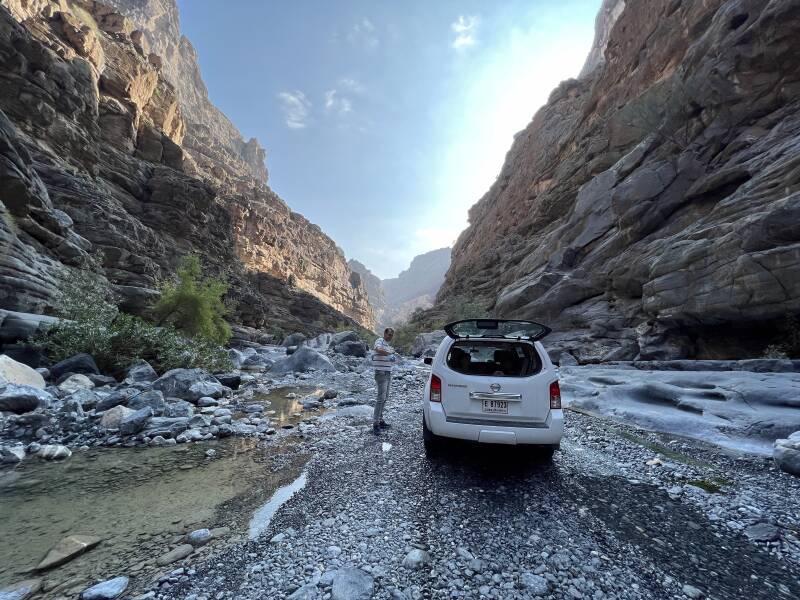
The Wadi Ghul is an immense dried riverbed close to Jebel Shams (‘Mountain of the Sun’), the highest peak in the Hajar mountain range. The canyon is breathtaking beautiful, reaching in some points 1 km (0.6 miles) in depth.
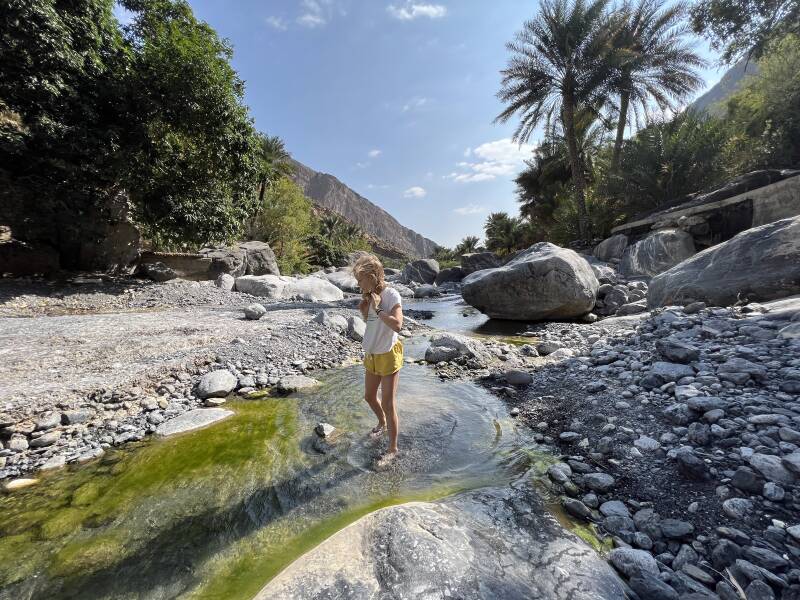
Oman is rich in natural wonders and history, from ancient stone castles in the desert to the waterfalls and lush vegetation appearing during the monsoon season (khareef) in the south.

Driving into the gorge of Wadi Ghul...
The route from the main road (parking: 23.1491632, 57.2038475), starts with a steep path down, which takes you to a huge gravel plain (Valley Necrosis).
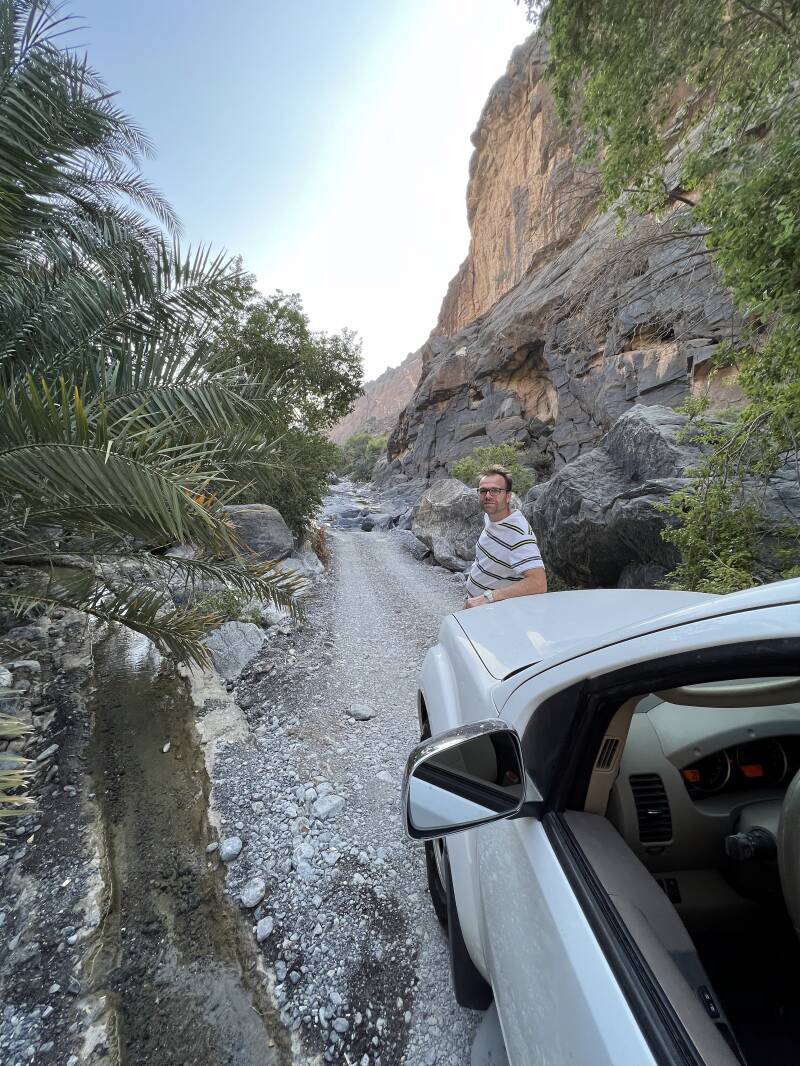
We followed the (ridden) path towards the gorge, after which it gets narrower and rougher, through small oases, past large boulders, farms, old (looked abandoned) villages, palm trees, water irrigation system, goats, be hardly able to take it all in.

Along the route ...
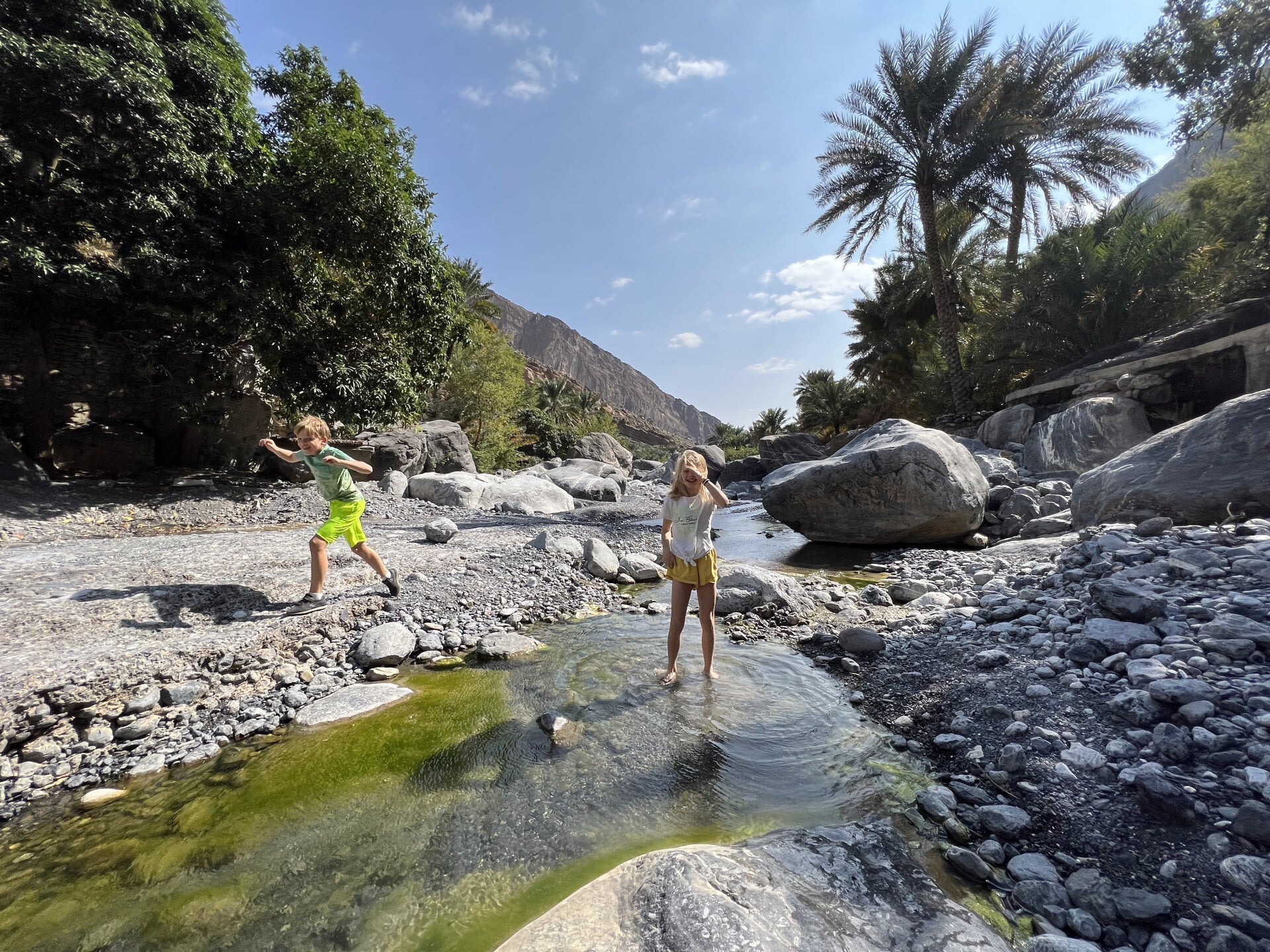
... there are stunning views, small oases and breathtaking overhangs. We put our swimsuits on and just had a relaxing time with bathing and a picnic. And nobody around, lovely.

To leave the wadi, you just have to drive the same way back. The total route inside the wadi, is around 6-7 km one way. You cannot continue driving through the canyon from there; it is a dead end, so you have to drive back the same way.
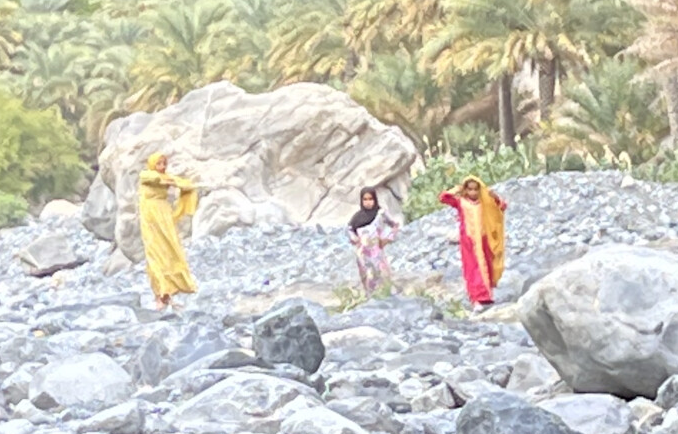
When leaving the wadi, we met these kids, and we bought a bracelet from them.
Jebel Shams
After this wonderful experience, we decided to take the way up to Jebel Shams and we probably reached half way.
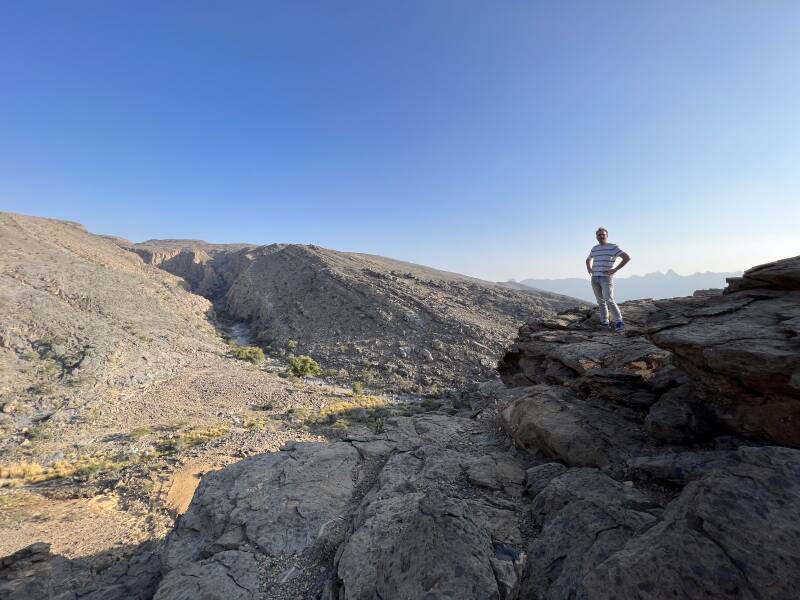
Unfortunately, we were running out of time, as we wanted to be down again before sunset and take the off road route over Jebel Kawr back to Dubai (also better driving with some daylight left). Glad it all went well.


Create Your Own Website With JouwWeb