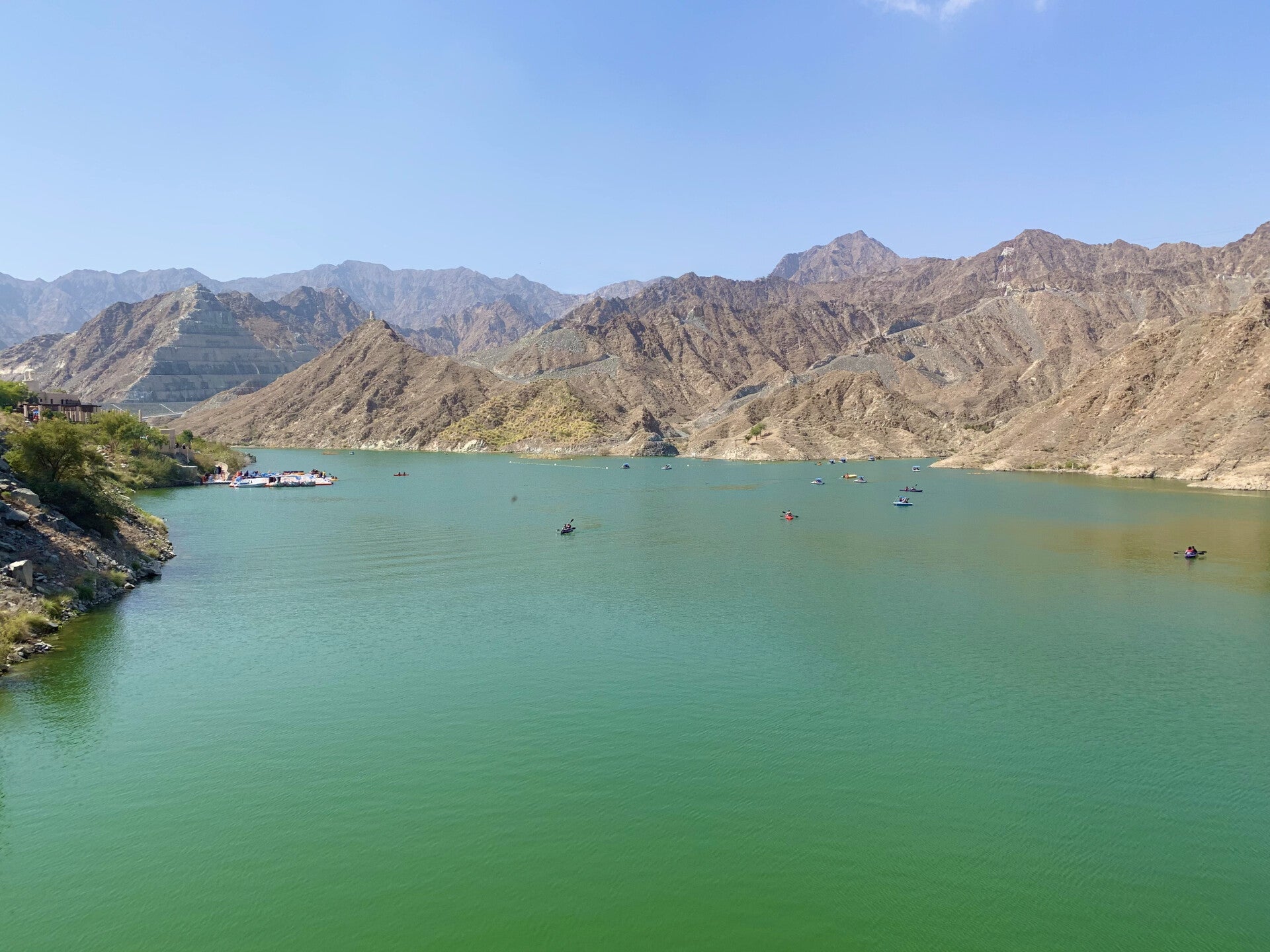
Rafisah Dam & Najd al Maqsar historical Village
February 2021
New weekend, new outdoor escape, and this time we pointed the car toward the mountains. Our destination: Rafisah Dam, a scenic spot tucked into the rugged landscape of the emirate of Sharjah, combined with a visit to the nearby Najd Al Maqsar Heritage Village. Lovely day!
What is Rafisah Dam used for?

Like many dams in the UAE, Rafisah Dam was built for practical reasons: collecting rainwater from the surrounding mountains, reducing flood risks during heavy rainfall, and helping replenish groundwater reserves. But over time, it has evolved into a recreational destination as well, one of those places where infrastructure meets nature in a surprisingly beautiful way.
What can you do there?

Rafisah Dam is more than just a viewpoint:
- Kayaking & pedal boats (you can rent a kayak or pedal boat)
- walking & exploring (several pathways)
- Picknicking (shaded areas)
- Play area for kids
- Swimming isn’t allowed (the reservoir is part of the region’s water management system).
Food & restaurants

Rafisah Dam isn’t just about the scenery, it also features a well-designed restaurant complex right by the water, with terraces that open up to uninterrupted views of the lake and surrounding mountains. It’s the perfect spot to pause and recharge after a walk or a kayaking session, with a relaxed menu of casual meals, drinks, and light bites. At the Khor Fakkan's corniche, which is just a short drive away from here, you can find a variety of seaside cafés and restaurants.
Daytrip to Rafisah Dam
From Dubai, it’s about 130 kilometers, roughly a 1 hour 20 minute drive, but it feels like you’re traveling much farther as the scenery transforms along the way. The glassy skyline fades, replaced first by stretches of desert, then by deep red dunes and eventually the dramatic, jagged peaks of the Hajar Mountains.

It’s one of those drives in the UAE that never gets old. Along the roadside, we even passed several cars selling fresh fruit straight from their trunks—an authentic, slightly chaotic touch that makes the journey feel more local and spontaneous.
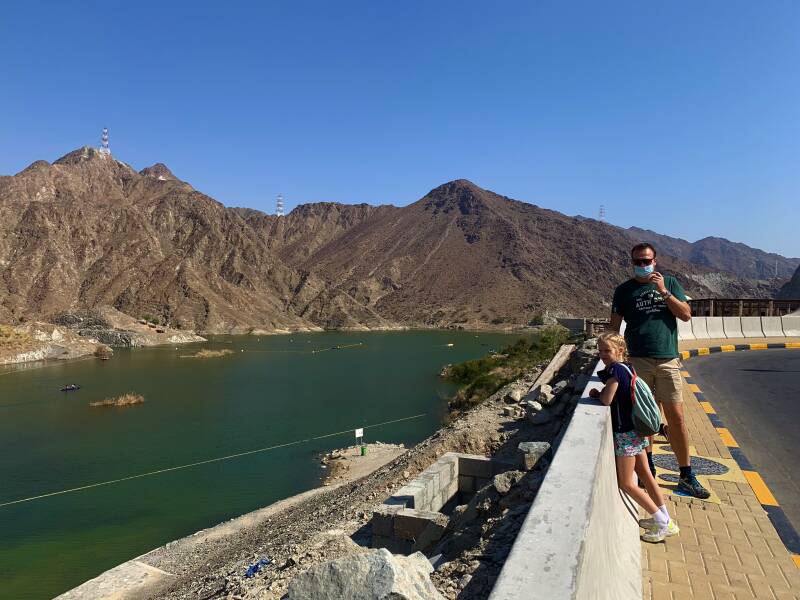
Arriving at Rafisah Dam, we parked our car at the spacious parking area. From the parking area, we immediately had a view of the lake, and that instantly made all of us happy. The setting is surprisingly lush compared to the arid landscapes we had just driven through. It’s a peaceful contrast, water framed by rocky cliffs, with palm trees and landscaped walkways adding a softer edge.
Emirati breakfast
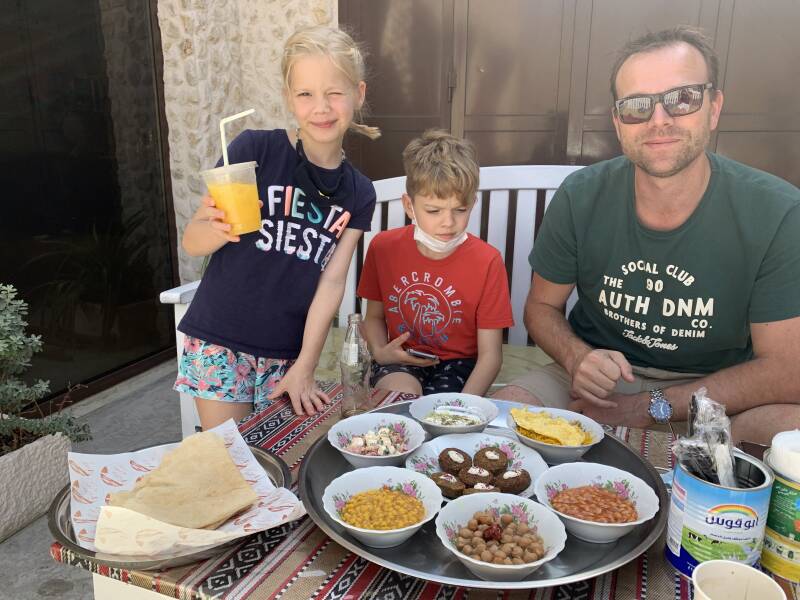
We arrived absolutely starving, so we did the only sensible thing—start the day with a proper Emirati breakfast before hitting the trails. The table quickly filled with delicious dishes: fluffy chabab (Emirati pancakes), sweet-and-savory balaleet topped with omelet, baidh tomato, fresh salad, crispy falafel, and warm baked beans. Exactly what we needed.
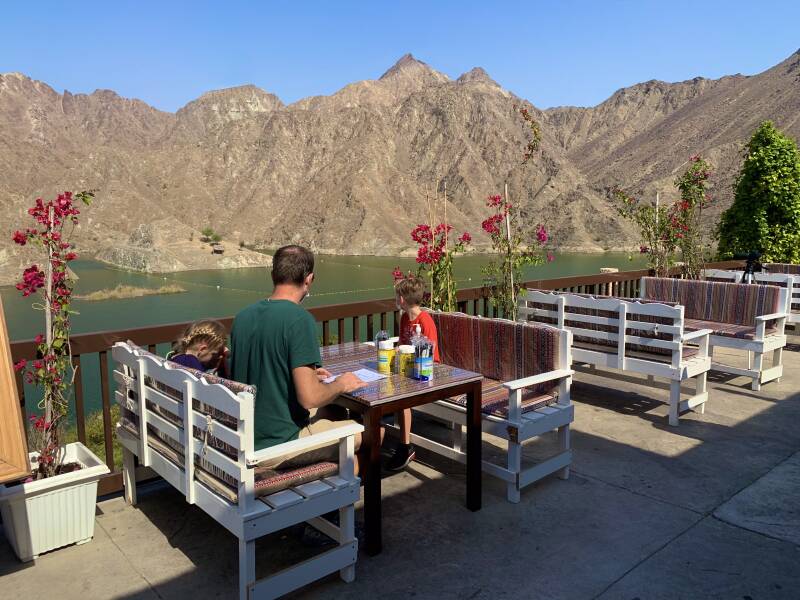
We had breakfast at Rafisa Lounge Restaurant & Cafe, beautifully set along the lake at Hawd Al Bid'ah. With the water right in front of us and mountains rising all around, the view alone was worth the stop.
Al Rafisah Dam Walk to Najd Al Maqsar Historical Village
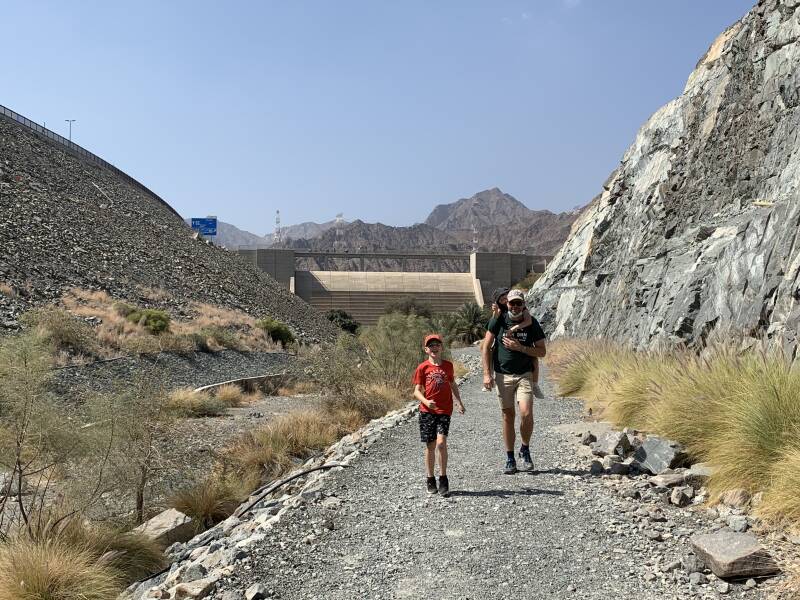
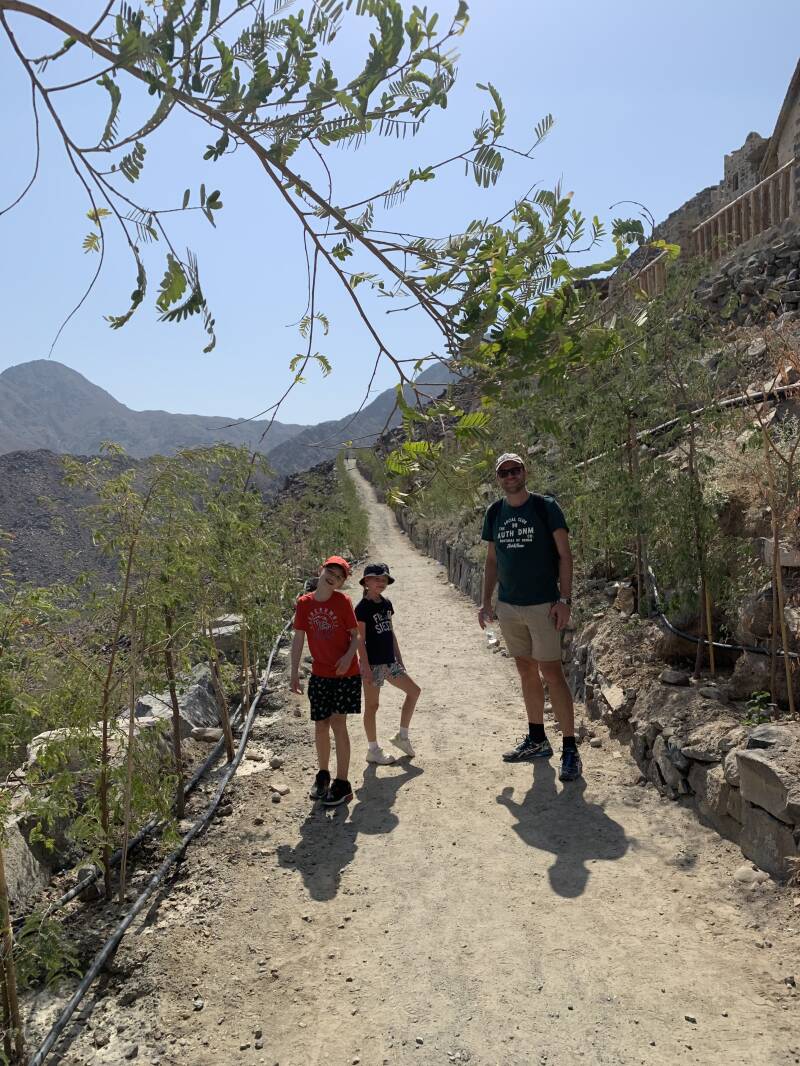
With our bellies full, we settled off across the dam for the Al Rafisah Dam Walk, simply known as 'The Walk'. The path gently winded along the water and into the mountains, gradually leaving the busy lakefront behind.

It’s an easy, scenic route, and the higher you climb, the better the views over the reservoir and surrounding peaks.
At the end of the trail, you reach a quiet viewpoint overlooking Najd Al Maqsar Heritage Village, and this is where the atmosphere shifts completely. The modern touches of Rafisah fade away, replaced by something much older and more reflective.
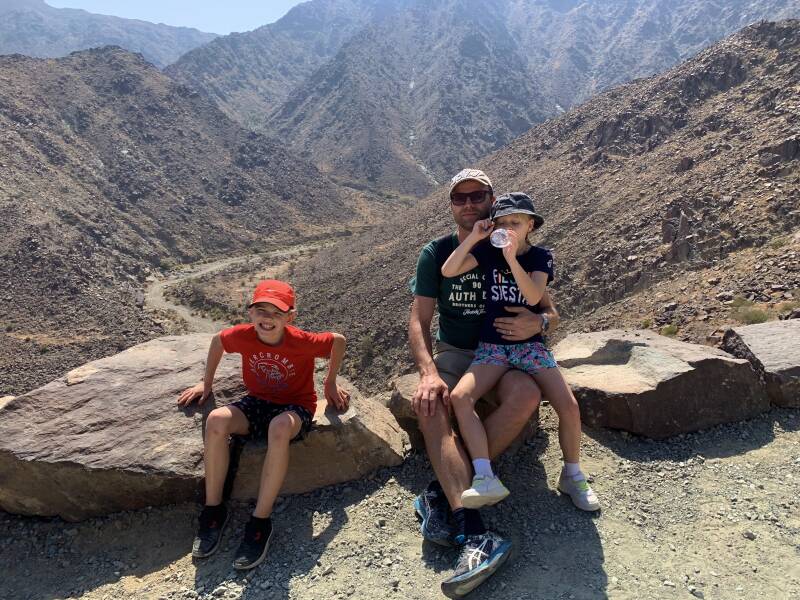
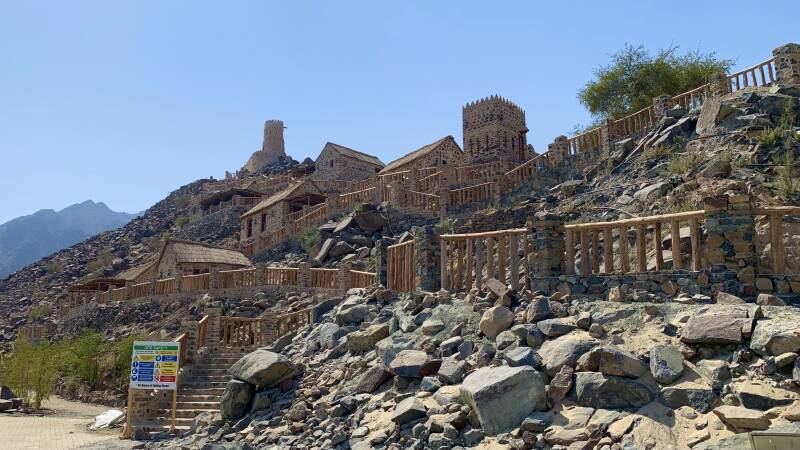
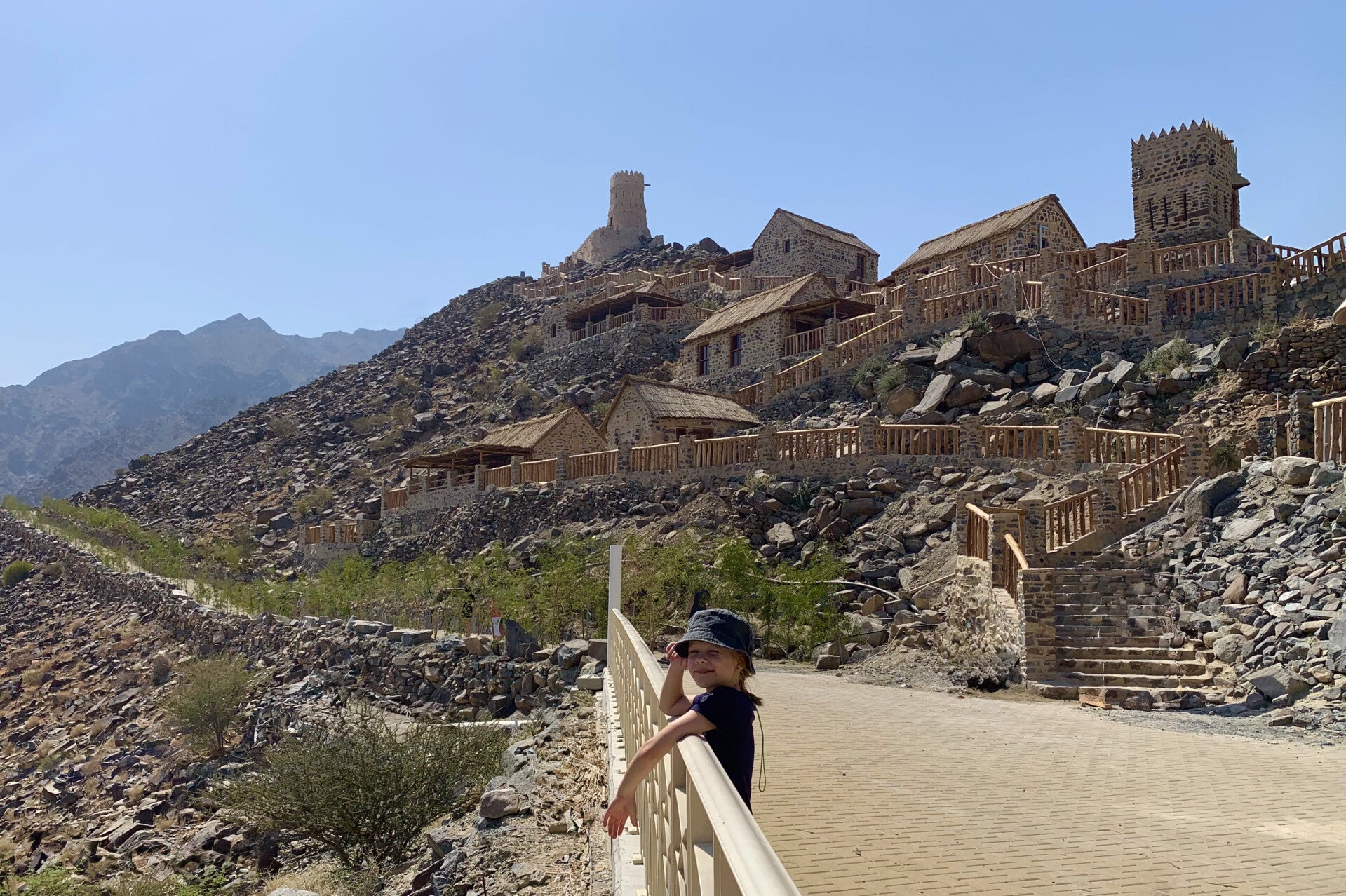
The village is considered one of the most important historic settlements in the Wadi Wishi area, part of the wider region of Khor Fakkan. Today, it has been carefully restored for visitors, so no one actually lives here anymore, but walking through it, you can still feel a sense of what life must have been like centuries ago.

The site consists of around 13 traditional stone houses, some of which are believed to be roughly 100 years old. Built into the mountainside, they blend almost seamlessly with the rocky surroundings. Narrow paths connect the structures, and from certain angles, the whole village seems to disappear into the landscape.

What makes this place even more fascinating is that its history goes far beyond those visible buildings. Archaeological finds in the area include rock carvings, depicting camels and horses, that are estimated to date back as far as 2000 BC. It’s a reminder that this valley has been part of human movement and survival for thousands of years.
There’s also a deeper historical layer tied to regional conflict. During the medieval period, when Portuguese colonization of the Persian Gulf affected coastal settlements, many inhabitants of Khor Fakkan are believed to have moved inland to places like Najd Al Maqsar. Hidden within the mountains and difficult to access, the village offered natural protection and a strategic refuge in uncertain times.
Watchtower
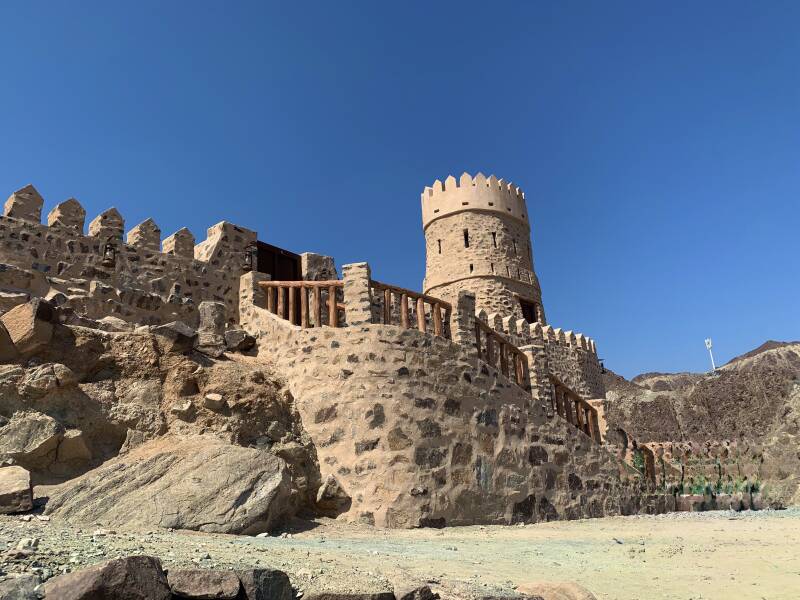
There is also a restored watchtower/fort perched higher up on the mountain. It’s a traditional defensive tower, built to keep an eye on the surrounding valleys and coastline. Once at the top, we were rewarded with panoramic views all the way toward Khor Fakkan and the coast. In the valley we could see farms, the city Khorfakkan and the mosque. Beautiful.
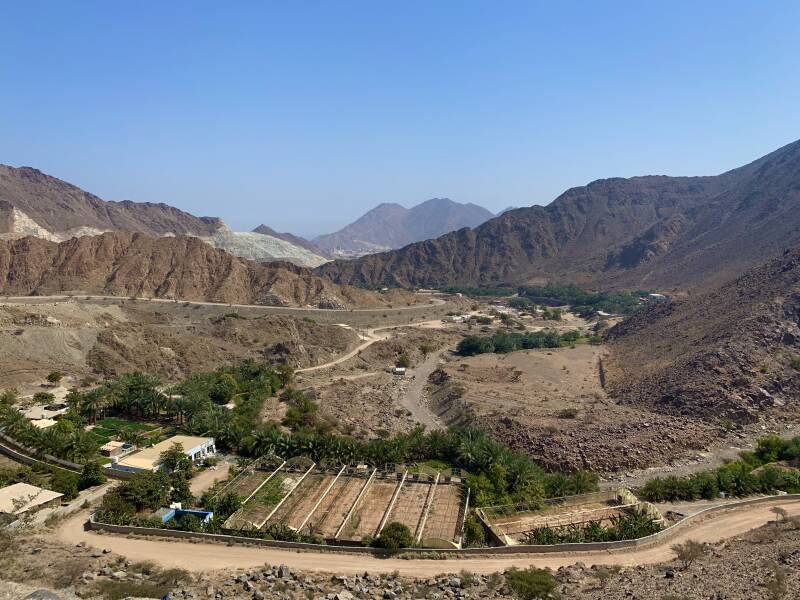
It’s easy to see why this spot was chosen: from here, you could monitor movement through the wadi and spot potential threats long before they arrived. Historically, in times of danger, especially during periods like the Portuguese colonization of the Persian Gulf, these elevated lookout points would have been crucial. Today, the fort has been restored as part of the heritage project.
What started as a relaxed lakeside walk ended as a small journey through history, adding an unexpected cultural layer to an already beautiful day outdoors.


Create Your Own Website With JouwWeb