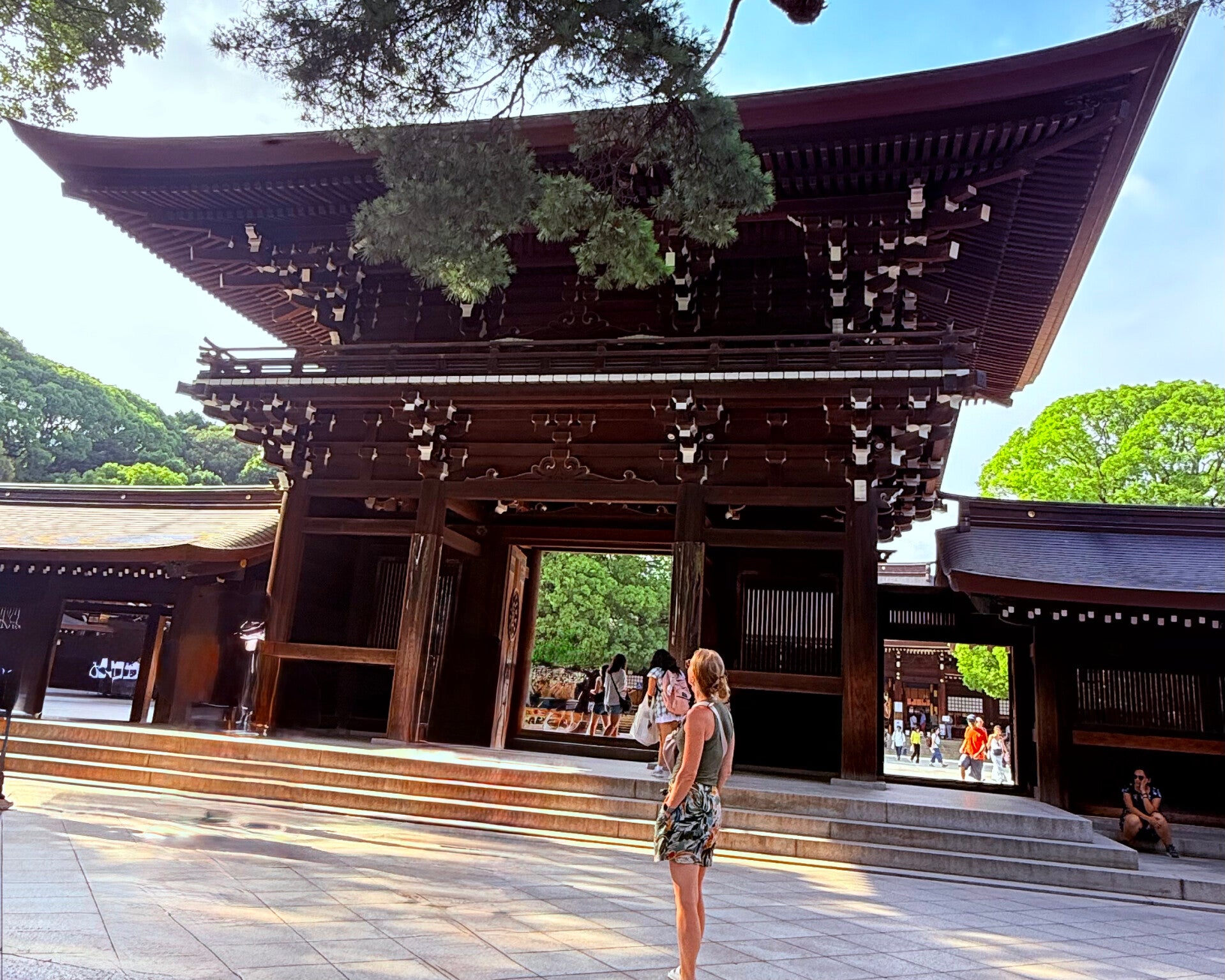
Welcome to Japan
Summer 2025
We have condensed our Japan trip into a blog and we’re thrilled to share this adventure with you. It was truly incredible. In just eleven days, we had the possibility to visit 5 amazing destinations.
- Kyoto (and surrounding region), where we stayed 2 nights at Insomnia Kyoto Oike (close to Karasuma Oike Station)
- Hiroshima, traveling by Shinkansen from Kyoto; here is where we stayed 1 night: KIRO Hiroshima by The SHARE HOTELS
- Kiso Valley, hiking and camping along the historic Samurai Trail, reached by Shinkansen and local train from Hiroshima, where we stayed another 2 nights, first night at Onn Nakatsugawa and the second night at Ties Campground Nagiso
- Tokyo, arriving via Shinkansen from Nagoya, where we also stayed 2 nights at Landabout Tokyo
- Mount Fuji (region), explored on a scenic road trip from Tokyo; here we spent our last 3 nights at Shoji Lake Hotel and Rohen Hakaneyumoto.
We pre-booked a car in Tokyo, so we were ready to hit the road, the day our roadtrip started. In Japan, motorists drive on the left-hand side of the road and you need an international driving license (IDP) based on the 1949 Geneva Convention. To maximize our time, we flew into Osaka and departed from Tokyo.

Traveling in Japan
Traveling in Japan is a seamless blend of tradition and technology — from ancient temples to high-speed bullet trains. Clean, safe, and incredibly organized, it’s easy to explore even without speaking Japanese. Every region offers its own charm — from Tokyo’s neon streets to Kyoto’s peaceful shrines. Enjoy Japan's incredible food culture—from sushi and ramen to street food and matcha desserts. Or the incredible convenience of a 7-Eleven on every corner.

Visa requirements
Before traveling, register via Etravel Japan — you will receive your QR code required for entry. With our Dutch passport, we could can stay in Japan for up to 90 days without a visa for purposes such as tourism, business meetings, or transit. Upon arrival, your passport will be stamped with 'Temporary Visitor (90 days)'. Without that stamp, you are not officially registered as a temporary visitor, and you won’t be able to rent a car.

Fun facts, do’s & don’ts
- Always use both hands when receiving money as a sign of respect.
- Stay quiet on the train.
- No tipping.
- Don’t eat or drink while walking, sit on the ground or blow your nose in public.
- You’ll often need to take off your shoes (sign: shoe rack).
- Tip: bring a small notebook for collecting free stamps (Goshuin).
Our Highlights & travel journey

Kyoto

Hiroshima

Kiso Valley

Tokyo

Mout Fuji
Day 1: The Adventure Begins
At last, the day had come — our long-awaited journey to Japan! After months of dreaming and planning, we finally took off from Dubai, with a short stop in Manila, before landing in Osaka. Japan has been sitting high on our bucket list for ages, so stepping off the plane at Kansai International Airport (KIX) felt almost surreal.
First things first: we headed straight to the JR Kansai Airport Station — conveniently connected to the terminal — to exchange our pre-booked Japan Rail (JR) vouchers. With that sorted, it was time to hop aboard the cutest train imaginable: the Haruka Hello Kitty train! In about an hour, we rolled into Kyoto, followed by a short metro ride (just three stops on the Karasuma Line) to reach our hotel.
Our home for the next two nights was a small, stylish city hotel tucked away in the lively Oike district. It immediately felt welcoming — modern, a bit quirky, and full of character. After checking in, we settled down in the cozy lobby, sipping complimentary drinks, nibbling on snacks, and even trying out a traditional Japanese game. A perfect, laid-back start to what we knew would be an unforgettable trip.

Haruka Hello Kitty train

Day 2: Historical Kyoto
We started our journey in Kyoto, once Japan’s imperial capital, Kyoto boasts over 1,200 years of history — a city where ancient traditions still breathe through its geisha districts and beautifully preserved machiya, the traditional wooden townhouses that give Kyoto its timeless charm.

⭐️ Sagano Scenic Train Ride
This morning, we set off to explore the western side of Kyoto. Getting there was already a little adventure in itself — first a metro ride, then a train to Saga-Arashiyama Station. From there, we hopped on the Sagano Scenic Train, a charming old-fashioned steam locomotive that took us from Torokko Station to Kameoka.

The ride was magical — the train wound its way through lush valleys, offering breathtaking views over the Hozu River below. With the wind in our hair and the rhythmic chug of the engine in the background, it felt like stepping back in time. Truly one of the most scenic train journeys we’ve ever taken!
⭐️ Hozu River Cruise
Next on our Kyoto adventure was a river cruise on the Hozu River.

This cruise took place in a traditional wooden boat through the mountain gorge from Kameoka to Arashiyama and was approximately 16 km long.

The scenery along the way was absolutely breathtaking — crystal-clear water, lush green hills, and the occasional splash from the rapids. At one point, Lieke even got to try rowing, which made everyone laugh (and splash a little!). Halfway through, a floating shop pulled up alongside our boat, offering local snacks and drinks — such a fun and unexpected touch!

It was one of those peaceful yet exciting experiences that make you fall in love with Japan all over again.
⭐️ Japanese Lunch
Our boat trip ended at the Togetsukyo Bridge, where we stepped ashore and headed straight for lunch at a traditional Japanese restaurant nearby.

⭐️ Bamboo Forest
From there, it was just a 10-minute walk to the famous Arashiyama Bamboo Grove. The moment we entered, we were surrounded by towering bamboo stalks swaying gently in the breeze, an otherworldly experience.
The soft light filtering through the green canopy made it feel calm, magical, and unforgettable.
⭐️ Fushimi Inari Taisha
After wandering through the serene Bamboo Forest, we made our way back to Kyoto city to visit one of Japan’s most iconic sites — Fushimi Inari Taisha.

This famous shrine is best known for its thousands of bright red-orange torii gates, forming a mesmerizing pathway that winds up the sacred Mount Inari.

Walking through the endless rows of gates felt almost magical — the sunlight flickering between the vermilion arches, the soft crunch of gravel underfoot, and the peaceful atmosphere despite the steady stream of visitors.

It’s one of those places that truly captures the spirit of Japan.

After a full day of sightseeing, we headed back to Kyoto Oike, and grabbed a bite at a cozy local spot nearby — this time opting for a Western-style menu.


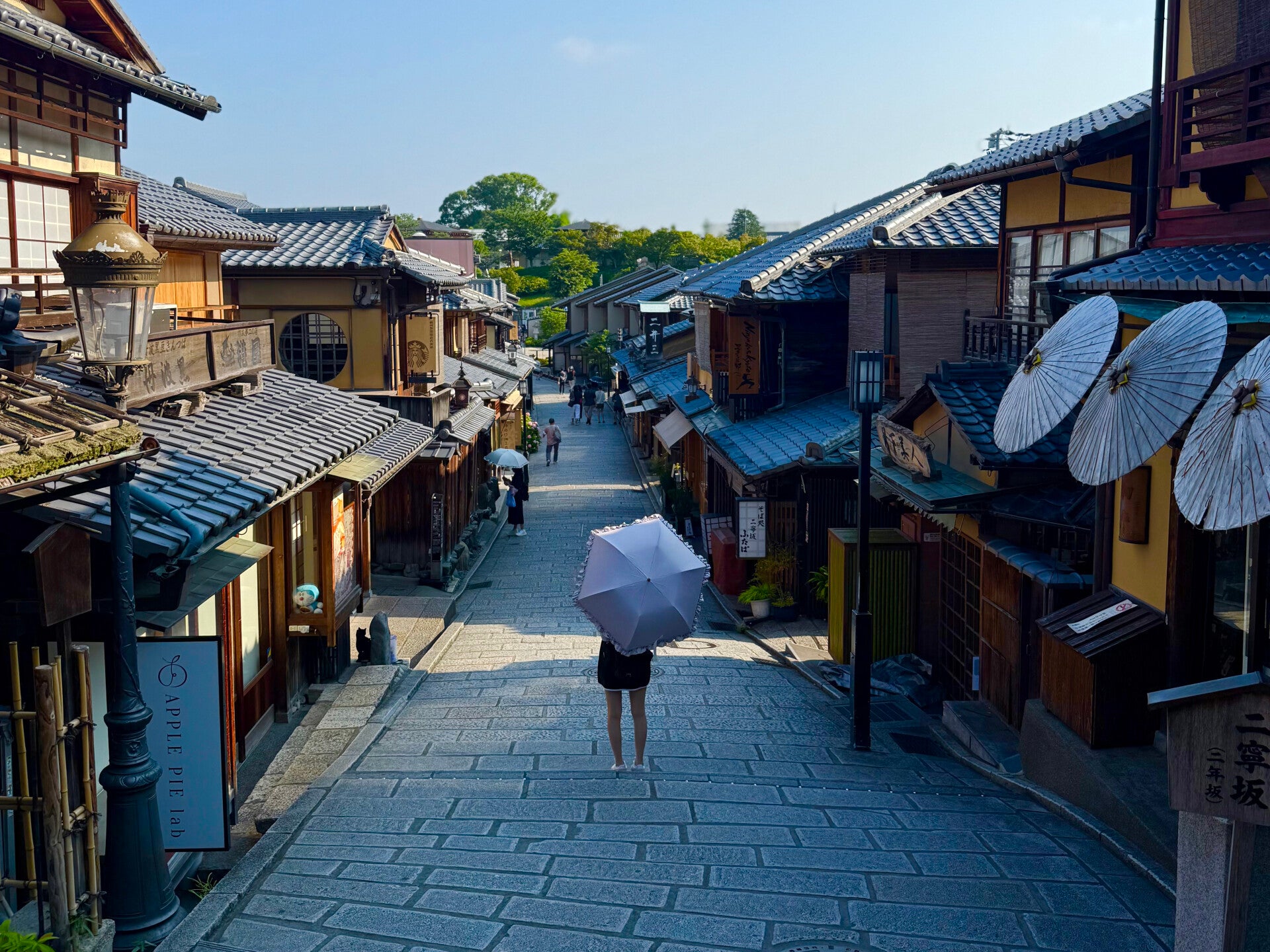
Ninezaka & Sannenzaka in Historical Kyoto
Day 3: Early rise in Kyoto & on to Hiroshima
Morning stroll Kyoto
This morning we were up bright and early to explore the historic heart of Kyoto.

⭐️ Gion - Geisha District
From our hotel, we strolled over to Nishi-Hanamikoji Street and wandered straight into the iconic district of Gion—Kyoto’s famous geisha quarter, celebrated for its traditional wooden machiya townhouses, intimate teahouses, and lively streetscape.

⭐️ Ninenzaka & Sannenzaka
From there, we continued on to Ninenzaka, a charming sloping lane lined with traditional shops, cozy tea houses, and souvenir stalls. Our walk carried us further up to Sannenzaka—another picturesque alleyway, even more atmospheric, with a steeper incline and sweeping views over the city and nearby temples.
⭐️ Kiyomizu-dera temple complex
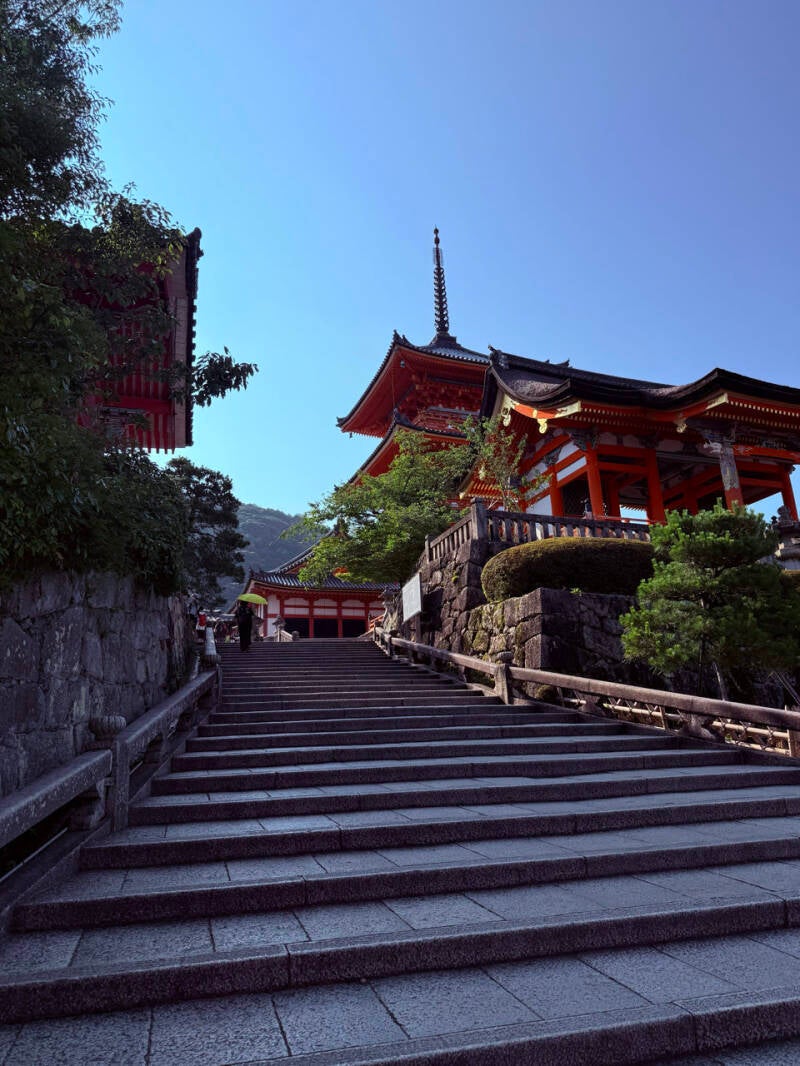
We ended our morning at the breathtaking Kiyomizu-dera, a magnificent temple complex offering panoramic views across Kyoto, truly a stunning city!
⭐️ Hiroshima
We continued our journey by the bullit train, the Shinkansen to Hiroshima — a city known around the world for the atomic bomb that struck here on August 6, 1945.

⭐️ Hiroshima Memorial Museum
After check-in at our hotel, our first stop was the Hiroshima Peace Memorial Museum, a deeply moving place that tells the story of that day through personal survivor testimonies and powerful photographs. It’s not only a memorial, but also a heartfelt call for a world free of nuclear weapons.

⭐️ Peace Memorial Park
From there, we wandered through the Peace Memorial Park, a beautifully designed green space filled with quiet pathways, memorials, and shaded benches — perfect for taking a moment to reflect (and to cool off).
⭐️ Children’s Peace Monument
We also visited the Children’s Peace Monument, dedicated to Sadako Sasaki and surrounded by thousands of colorful paper cranes. It’s a touching and inspiring reminder of the countless children who died in the years following the bombing as a result of radiation exposure.

⭐️ Atomic Bomb Dome (Genbaku Dome)
Our final stop was the haunting Atomic Bomb Dome (Genbaku Dome) — now a UNESCO World Heritage Site and a powerful symbol of both tragedy and resilience.
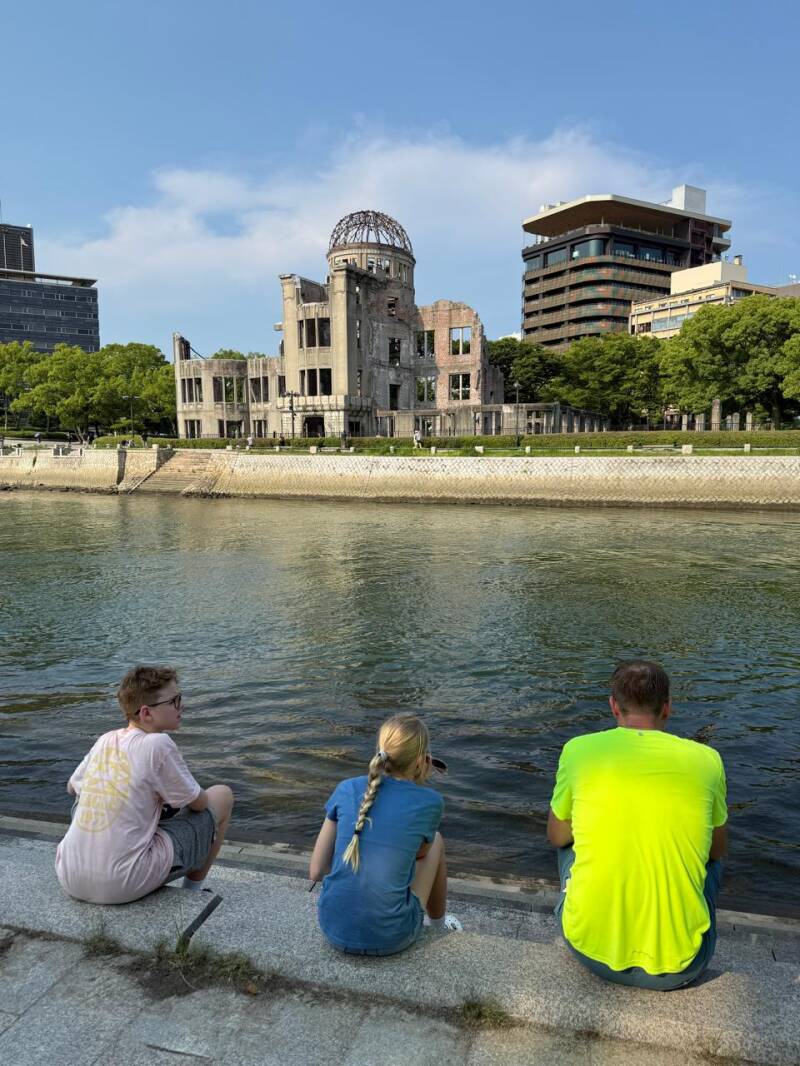
We sat down by the Motoyasu River, the same river many survivors fled to immediately after the bomb detonated, seeking relief from their burns. Eyewitness accounts and photographs describe how countless people, severely burned and dehydrated, stumbled to the water. Some slipped in because they were too weak to stand; others lay in the river to soothe the pain. For many, the water became their final resting place — through injury, exhaustion, or drowning. Sitting there, it left us completely silent.

Despite its painful history, Hiroshima has transformed into a vibrant, modern, and incredibly welcoming city. Without a doubt, it became one of the highlights of our journey through Japan.


Day 4: Kiso Valley
We said goodbye to Hiroshima and made our way (by train) to the Kiso Valley, arriving in Nakatsugawa around noon. After checking in — and grabbing a quick lunch at 7-Eleven 😁 — we hopped in a taxi to Tsukechi Gorge, where we set off on a beautiful hike through an ancient forest.

The trail led us past crystal-clear streams, over moss-covered rocks, and across several suspension bridges, all the way to the stunning Tsukechi Waterfall. It felt like stepping into a hidden oasis — peaceful, untouched, and surrounded by nature at its best. We took the taxi back to the hotel.

In the evening we had dinner in the village at a cozy, traditional Japanese restaurant. Funny enough, we were seated in a little private booth again—apparently completely normal in Japan, but special to us. Back at the hotel, we slipped into the onsen for a final soak, the perfect calm to end the day.


Day 5: Hiking the Old Nakasendo Trail
In the footsteps of the Samurai

We started early today for our hike along the Nakasendō Trail, also known as the Samurai Trail — a historic route that once connected Kyoto and Tokyo during the Edo period (1603–1868). Stretching over 500 kilometers and passing through 69 post towns, the Nakasendō was once a vital artery for travelers, merchants, and samurai making their way across Japan.

We had arranged a luggage transfer service for our luggage and had a taxi drop us off at the starting point of our hike: Magome-juku.
⭐️ From Magome-juku to Tsumago-juku
Our walk took us through one of the most beautiful and best-preserved sections on the old Nakasendō: the route between the two charming post towns: Magome-juku and Tsumago-juku. These towns once served as bustling hubs for news, gossip, and official messages. Couriers (hikyaku) dashed between them carrying letters and government orders along this very trail.

Along the trail, you’ll come across several wooden information boards known as kosatsuba — official notice boards used during the Edo period to publicly display shogunate edicts, laws, and important regulations. These boards were typically placed in prominent locations so that travelers and local residents alike could read the rules governing daily life.
They served as a key communication tool of the time, announcing everything from tax policies and travel restrictions to moral codes and prohibitions. Seeing them along the path today offers a tangible glimpse into how authority and information were shared in historical Japan.

⭐️ Odaki & Medaki Waterfalls
Halfway, we were treated to two beautiful waterfalls: Odaki & Medaki Waterfalls. Valentijn took a refreshing dip in them.

The hike from Magome to Tsumago was about 8.3 kilometers.

⭐️ Post town Tsumago-juku
Tsumago-juku is even more beautiful and authentic than Magome-juku. We treated ourselves to a nice coffee/drink.

After this wonderful break, we walked the last stretch to the end point of the day: Nagiso, which was another 4 kilometers.

⭐️ Camping in the Kiso Valley
Our hike ended in Nagiso, where we treated ourselves to a late lunch at a charming little café near the station. From there, we took a taxi to our stay for the night at Ties Campground, where we had booked a tent.

The evening couldn’t have been better: a relaxed barbecue under a sky full of stars, followed by a soothing soak in the foot onsen.


In summary: surrounded by lush mountains, stone-paved paths, and villages that feel untouched by time, it was as if we had stepped straight into Japan’s Edo-era past. Almost surreal — and an unforgettable hike!


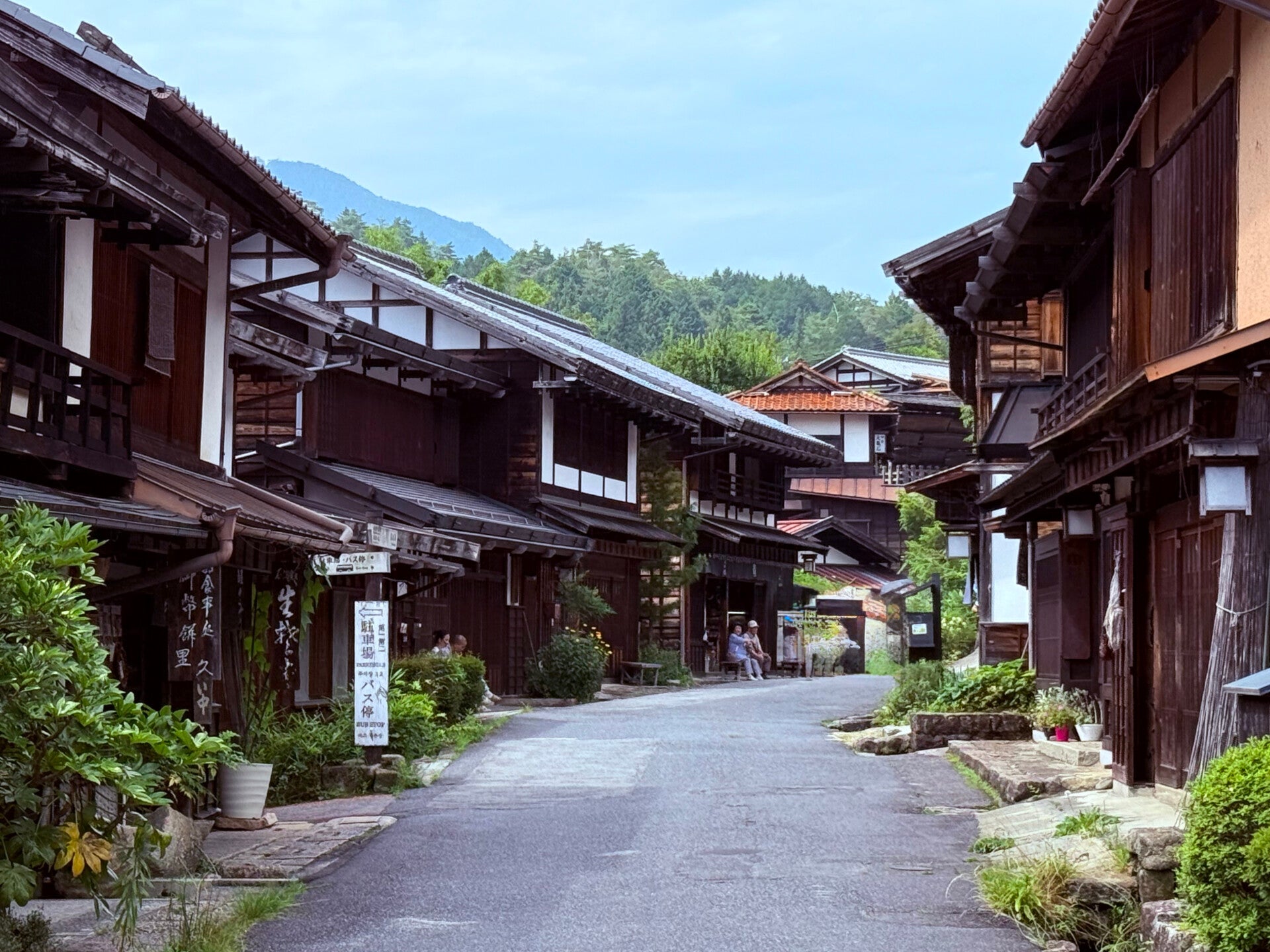
Post Town Tsumago-juku
Day 6-8: Tokyo
Birthday Girl

The morning began with something special — a birthday breakfast for Lieke, who turned 14 today! After celebrating, it was time to pack up and continue our journey. Next stop: Tokyo.

We hopped on the Shinkansen bound for Tokyo — the world’s biggest metropolis — and rolled into the city around 2 p.m. After checking into our hotel, we kicked off the celebrations for Lieke’s birthday with coffee and a sweet treat at a cozy little café just around the corner.

That evening, the festivities continued with a mini birthday party in our very own private karaoke room — and it was an absolute blast!

We wrapped up the day with a delicious dinner in Taitō City, the perfect way to end Lieke’s birthday in the heart of Tokyo.

Exploring Tokyo
Today we went exploring Tokyo. This city has a population of approximately 37 million, making it one of the largest urban agglomerations in the world.

⭐️ Tokyo Skytree
We kicked off the day with a visit to the Tokyo Skytree, whose observation deck sits an incredible 450 meters above the city. As the tallest structure in Japan, it treats you to sweeping, panoramic views of Tokyo — an absolute must if you want to see the city’s endless buzz from above.

⭐️ Tokyo River Cruise
From Asakusa Pier, we drifted down the Sumida River toward Hinode Pier, gliding under Tokyo’s iconic bridges and watching the skyline unfold from the water. It was a wonderfully relaxing way to experience the city from a completely different angle.

⭐️ Meiji Jingu Shrine
Next, we stepped into the peaceful world of Meiji Jingu, a Shinto shrine nestled within a lush urban forest and dedicated to Emperor Meiji and Empress Shoken. Towering trees lined the wide gravel paths, creating a serene buffer from the busy city beyond. The tranquil atmosphere and subtle spiritual presence made it the perfect place for a quiet stroll, offering not only a moment of calm but also a meaningful glimpse into Japan’s deep-rooted traditions and reverence for nature.
⭐️ Harajuku

From serenity straight into neon energy: we wandered through Harajuku, one of Tokyo’s most vibrant and quirky neighborhoods. Known for its vintage boutiques, bold street culture, and endless food spots, it’s a feast for the senses. At the heart of it all is Takeshita Street, a colorful strip packed with trendy shops, whimsical animal cafés, and irresistible snack stands.
We even visited a Mipig café — and yes, we cuddled with the cutest little micro pigs!

⭐️ Shibuya Crossing

We ended the day at one of the most iconic intersections on the planet. With every green light, up to 3,000 people cross Shibuya Crossing at once — a mesmerizing, organized chaos. We headed up to the Magnet Shibuya109 building to watch the spectacle from above during sunset, sipping a delicious drink while the city lit up below us.


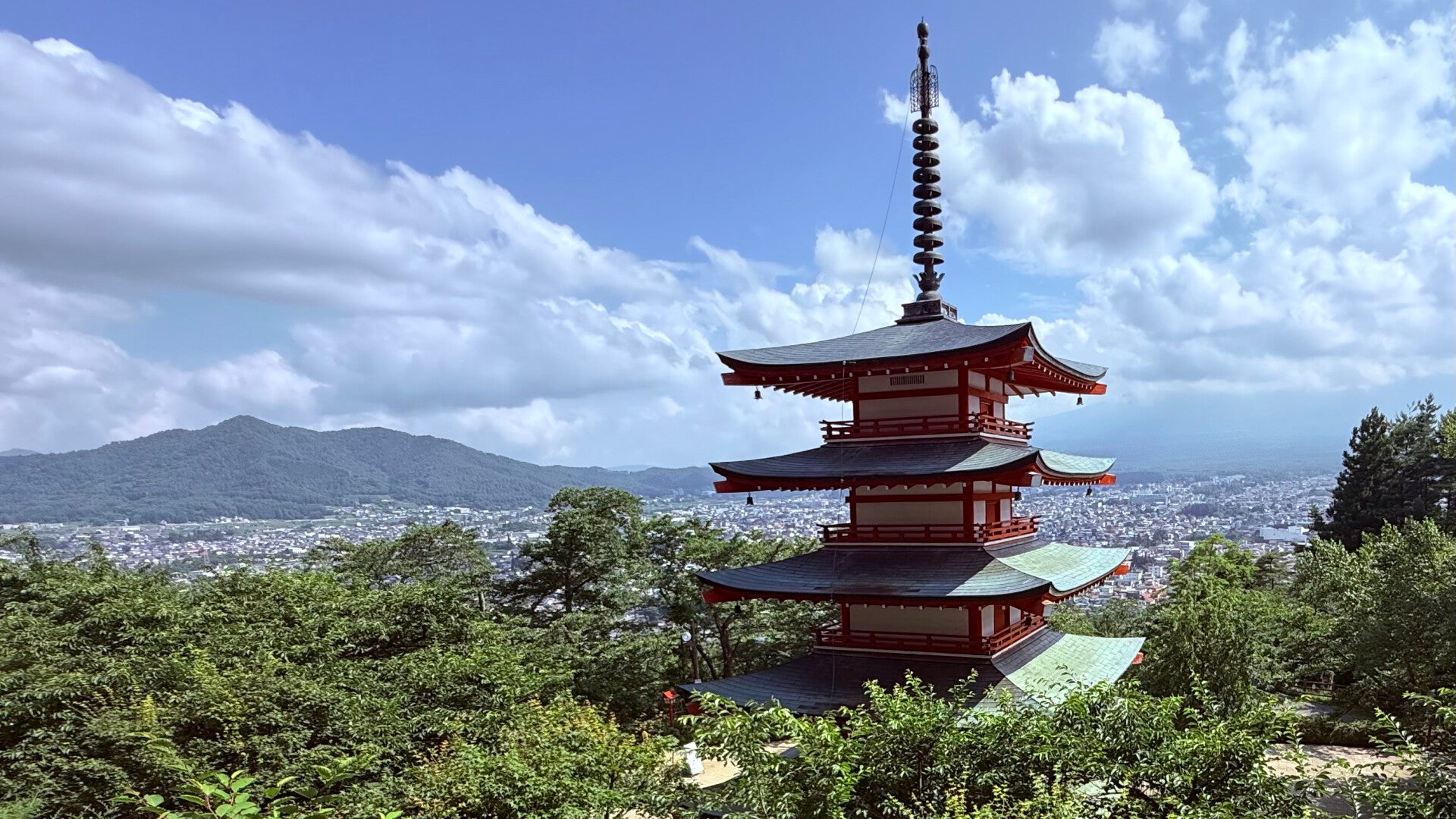
Chureito Pagoda, Mt. Fuji region
Day 9-11: Roadtrip Mount Fuji
This morning we checked out bright and early and picked up our rental car in the Ueno district. Leaving the busy city behind, we set off on a three-day road trip in and around the Mount Fuji region.

⭐️ First stop: Chureito Pagoda
Our first stop was the Chureito Pagoda, a stunning temple overlooking Mount Fuji — or at least, where Mount Fuji should have been, since it was mostly hidden from view. Even so, this spot is home to one of Japan’s most iconic postcard scenes. The climb up to the viewing platform was a serious workout, but every step was absolutely worth it.

⭐️ Kawaguchiko
Next up: the panoramic ropeway in Kawaguchiko. In just three minutes the cable car whisked us to the top of Mount Tenjo, where we should have been treated to sweeping views of Mount Fuji and Lake Kawaguchi. Fuji was only barely visible through the haze, but we caught the faint outline — a mysterious, almost dreamlike glimpse of the mountain.

⭐️ Mount Fuji & Lake Shoji
Our road trip continued past Lake Kawaguchiko and Lake Saiko, with a quick bite to eat along the way. Around 6 p.m. we checked in at our hotel on the shores of Lake Shoji — an absolutely stunning spot. From here, we even caught a glimpse of Mount Fuji during sunset, if only for a few magical minutes.

In the evening, we hosted our very own little kimono dressing party. Every hotel we’ve stayed at in Japan has provided kimonos (or yukata), traditionally worn when heading to the onsen — a bathing custom that has been part of Japanese culture for centuries.
This time, we decided to put all four on at once and fully embrace the experience. What started as a simple idea quickly turned into a lot of laughter as we tried to tie the belts properly and strike our most “elegant” poses. Of course, we captured the moment with a few photos — and let’s just say it was as hilarious as it was memorable.

Second day roadtripping
This morning we continued our road trip with our first stop at Saiko Iyashi-no-Sato Nenba, a charming open-air museum village on the western shore of Lake Saiko.

⭐️ Saiko Iyashi-no-Sato Nenba
Once a traditional settlement of more than 40 kabuto-zukuri thatched-roof houses — named for their resemblance to samurai helmets — the village was largely destroyed by a typhoon in 1966. In 2006, about twenty of these homes were rebuilt using traditional techniques and reclaimed materials, transforming the area into an atmospheric open-air museum.

Today, the restored houses host craft workshops, small museums, cozy restaurants, and even dressing rooms where you can try on traditional outfits such as kimonos, samurai armor, or ninja costumes. The distinctive architecture — especially the large second-floor windows — reflects the village’s history in sericulture (silk production): the design allowed for plenty of light and airflow to help silkworms thrive. A peaceful, beautifully preserved glimpse into Japan’s rural past.

⭐️ Shiraito & Otodome Waterfalls
Our second stop of the day took us to the Shiraito and Otodome Waterfalls, two stunning cascades on the southwestern side of Mount Fuji — a popular and well-loved nature spot.

Shiraito Falls, or the “White Threads Waterfall,” gets its name from the way the water fans out into countless thin, silky streams. Stretching roughly 150 meters across, it creates a fairytale-like scene, especially with the lush greenery framing the backdrop.

⭐️ Otodome Falls
Just a short walk away is Otodome Falls, the “Sound-Stopping Waterfall.” According to legend, two samurai once used the thunderous roar of the falls to speak in secret, their voices hidden by the crashing water. At around 25 meters tall, it’s narrower but far more powerful — a dramatic contrast to the graceful, curtain-like flow of Shiraito.

Together, they make for a beautiful pairing and a refreshing break in nature.
⭐️ Mishima Skywalk

Next, we made our way to the Mishima Skywalk, a 400-meter suspension bridge — the longest in Japan — where sweeping nature views and the thrill of floating above the landscape come together.

And because we’re total daredevils 😉, we hopped on the 560-meter zipline without a hint of nerves. Soaring over the valley with panoramic views of the bridge below — and even Mount Fuji on a clear day — was an unforgettable rush. Such a fun adventure!

⭐️ Hakone
Our final destination for day two of our road trip was Hakone, a picturesque town famous for its natural hot springs (onsen), stunning views of Mount Fuji, and the serene waters of Lake Ashi. We enjoyed a delicious (Italian ;-) dinner in the village, soaking up the charming atmosphere.

We stayed at Hotel RoheN Hakone Yumoto, where we treated ourselves to a private onsen session in the evening — pure bliss and the perfect way to unwind after a full day of exploring.


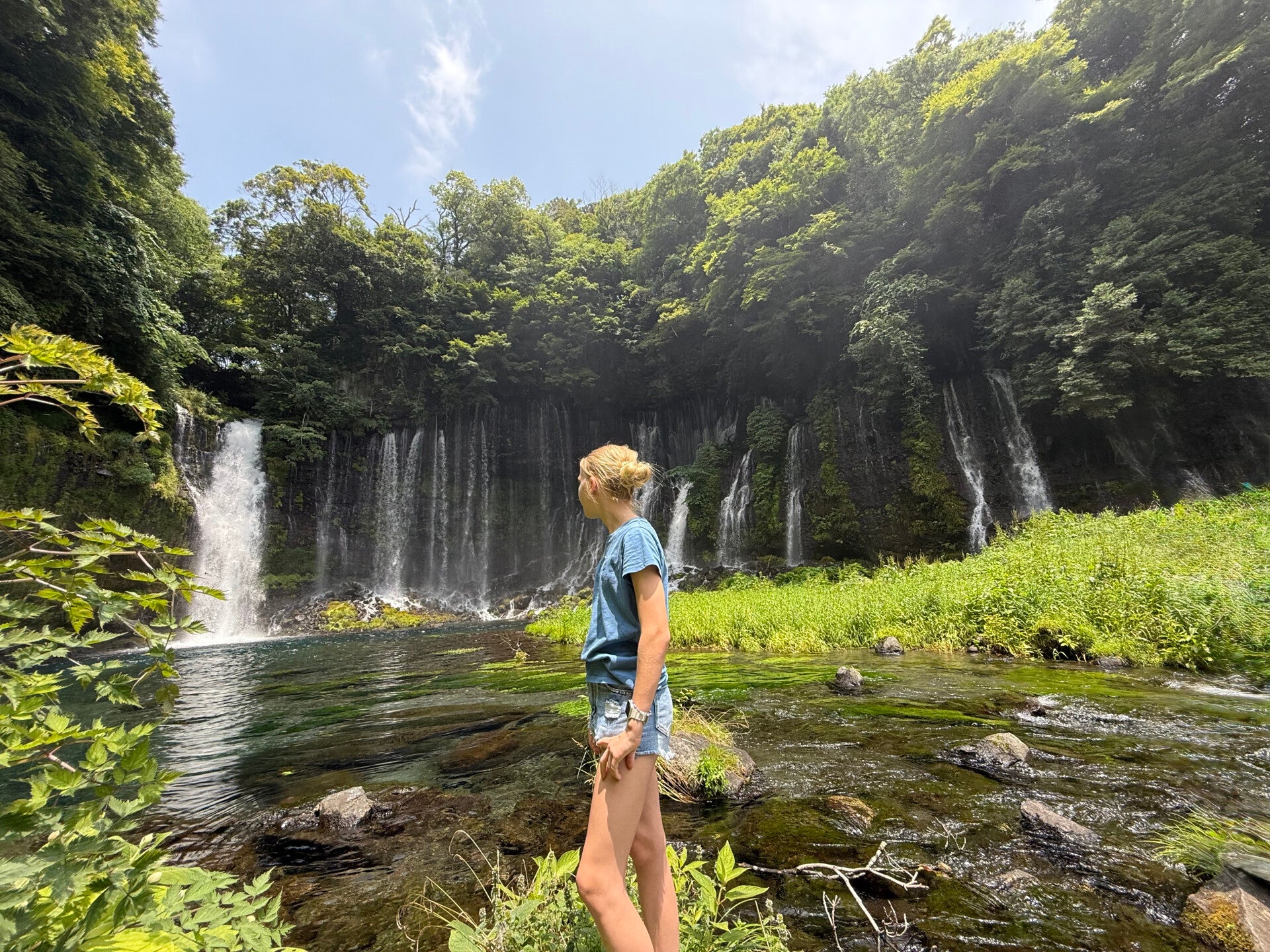
Shiraito Falls
Last day in Japan
We started our day bright and early, eager to make the most of our final hours in Japan.

⭐️ First stop: Odawara Castle
Our first stop was Odawara Castle, located in the city of Odawara in Kanagawa Prefecture. In the 15th and 16th centuries, this fortress was the stronghold of the powerful Hojo clan, renowned for its impressive defensive structures.

The walk up to the castle was just as rewarding as the castle itself, offering scenic views and a chance to soak in the history along the way.

⭐️ Hokokuji Bamboo Forest
Next, we visited the Hokokuji Bamboo Forest in Kamakura, a serene garden filled with hundreds of tall, slender bamboo stalks. As the gentle sunlight filters through the towering stems, it creates a mesmerizing play of shadows that feels almost magical.

Bamboo forests hold a deep place in Japanese culture and aesthetics. They symbolize resilience and purity, and their elegance is often reflected in traditional decor and design. Walking through this peaceful grove was a truly calming experience.
To the airport
We grabbed a late lunch along the way before making our leisurely drive to Narita International Airport in Tokyo, where we returned our rental car.

With some extra time to spare, we wandered through the airport, soaking in the last moments of Japan and spending our final yen on a few special souvenirs. Leaving Japan, we felt a deep sense of gratitude for all we had seen and experienced.
After a four-hour flight, we touched down in Manila, Philippines 🇵🇭, where we had a short layover before catching our domestic flight to El Nido, in the Palawan Islands — ready for the next adventure.


More Asian & Middle East vibes...?
Asia has many wonderful travel destinations. You can read our Asian blogs below (click on the photo).

Thailand

Nepal

Maldives

Oman

Sri Lanka

Create Your Own Website With JouwWeb