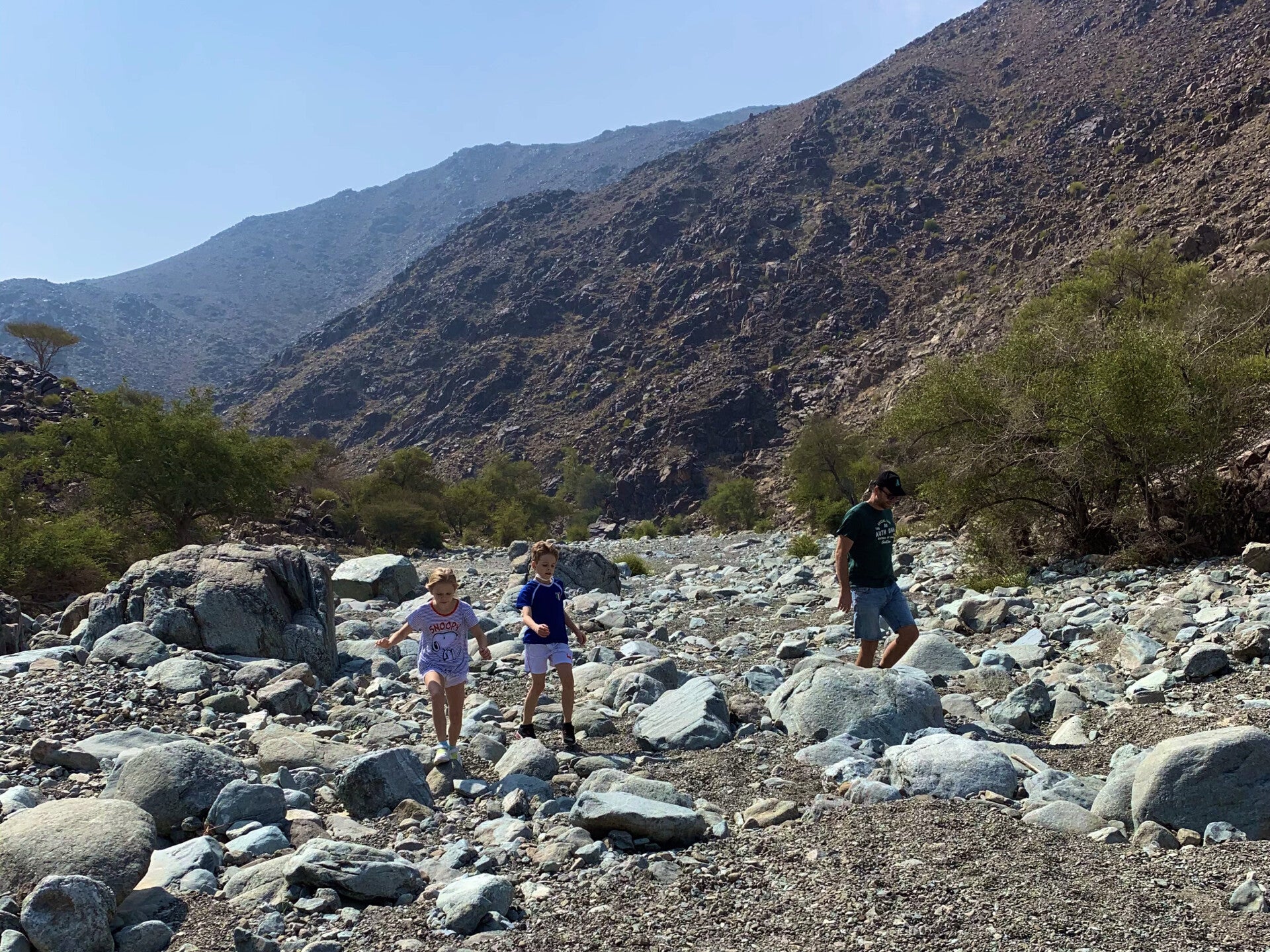
Wadi Al Helo Sharjah
February 2021
We set out early for a day trip to Wadi Al Helo, eager to escape the city and explore one of the UAE’s lesser-known mountain valleys. As the road carried us toward the rugged peaks of the Hajar Mountains, the scenery slowly shifted from urban landscapes to dramatic rocky slopes and open desert. With the promise of history, quiet villages, and a peaceful hike ahead, Wadi Al Helo felt like the perfect place to spend a day discovering a different side of the country.
Wadi Al Helo, which translates to “Sweet Valley”, is tucked into the rugged slopes of the Hajar Mountains in the Kalba region. The name reflects the presence of fresh water in the area, something that has historically made this valley unusually fertile in an otherwise arid landscape. Because of its natural resources and strategic position, Wadi Al Helo once lay along an important caravan trade route linking the coast with the interior. Today, its cultural and historical value is so significant that it has been proposed as a UNESCO World Heritage Site.
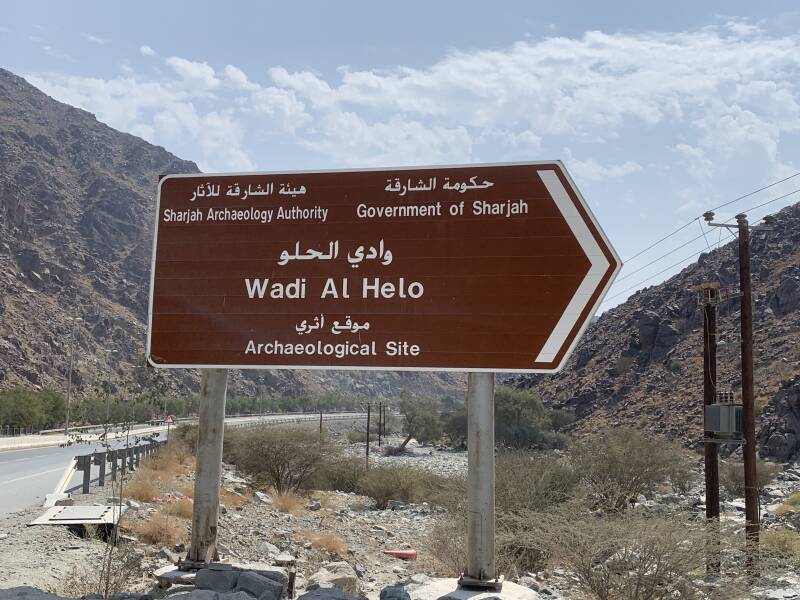
The journey to Wadi Al Helo is an experience in itself. The road winds through dramatic mountain scenery, with constantly changing views that make it hard to resist stopping for photos. Once you leave the paved highway, the route becomes a rough dirt track leading deeper into the valley. Along the way, small farming villages appear, sustained by the valley’s freshwater supply. These settlements cultivate dates and a variety of fruits, offering a glimpse into traditional agricultural life in the UAE.

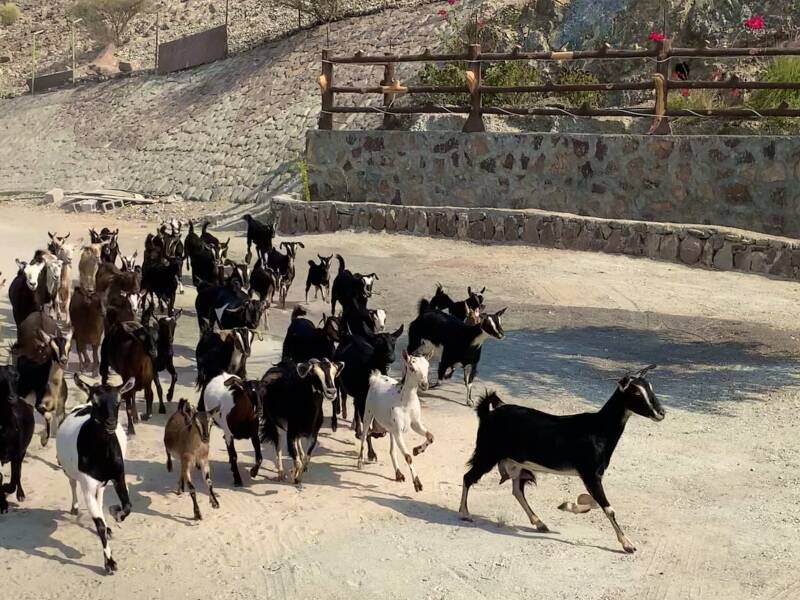
As we passed through one such village, goats wandered freely and even approached us curiously. At one point, we had to open and close a simple gate ourselves, likely designed to keep livestock contained within the village boundaries. These small interactions added a sense of authenticity and connection to the place.
Not far ahead, we encountered a restored Islamic watchtower, one of three in the area, though we managed to see only two. These towers once served as lookout points, helping protect the valley and monitor movement along the trade routes.

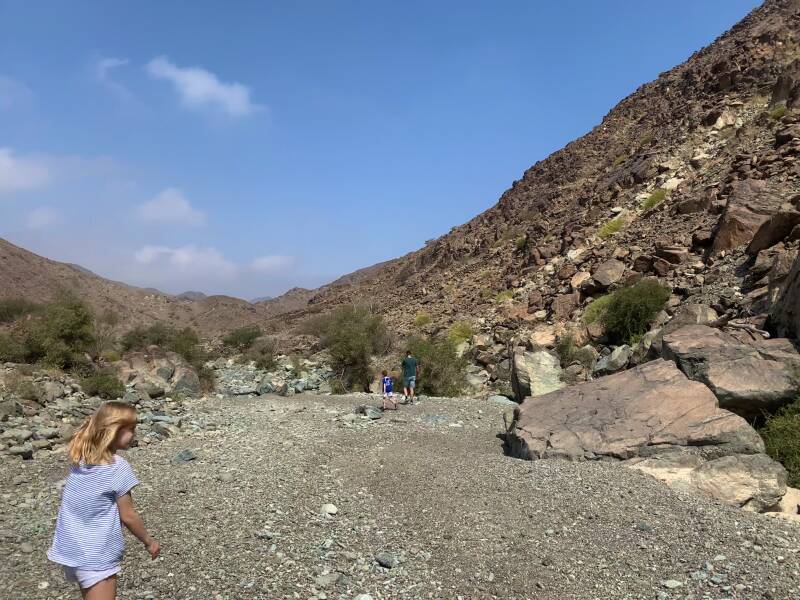
We parked nearby to explore and take in the surroundings before continuing further. Eventually, we reached the entrance of the wadi itself. Despite its name, there was no visible water at the time, wadis often remain dry except during or after rainfall.

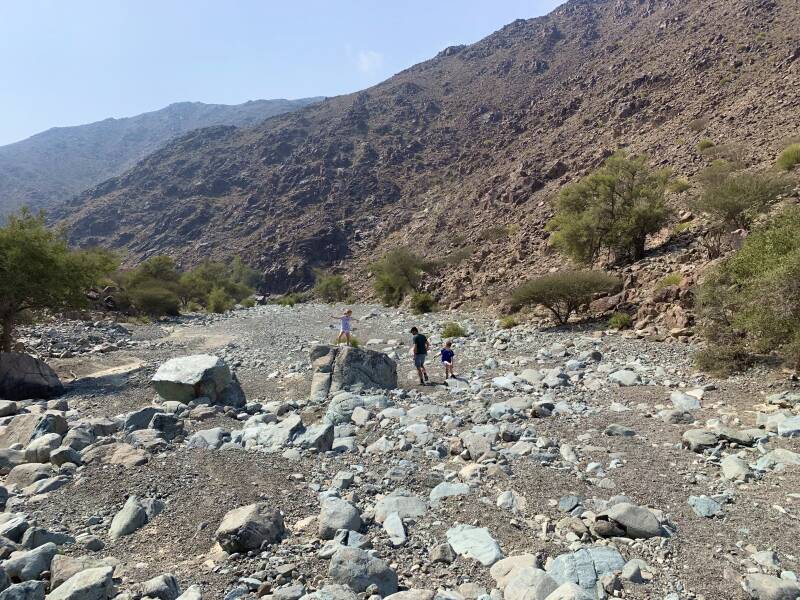
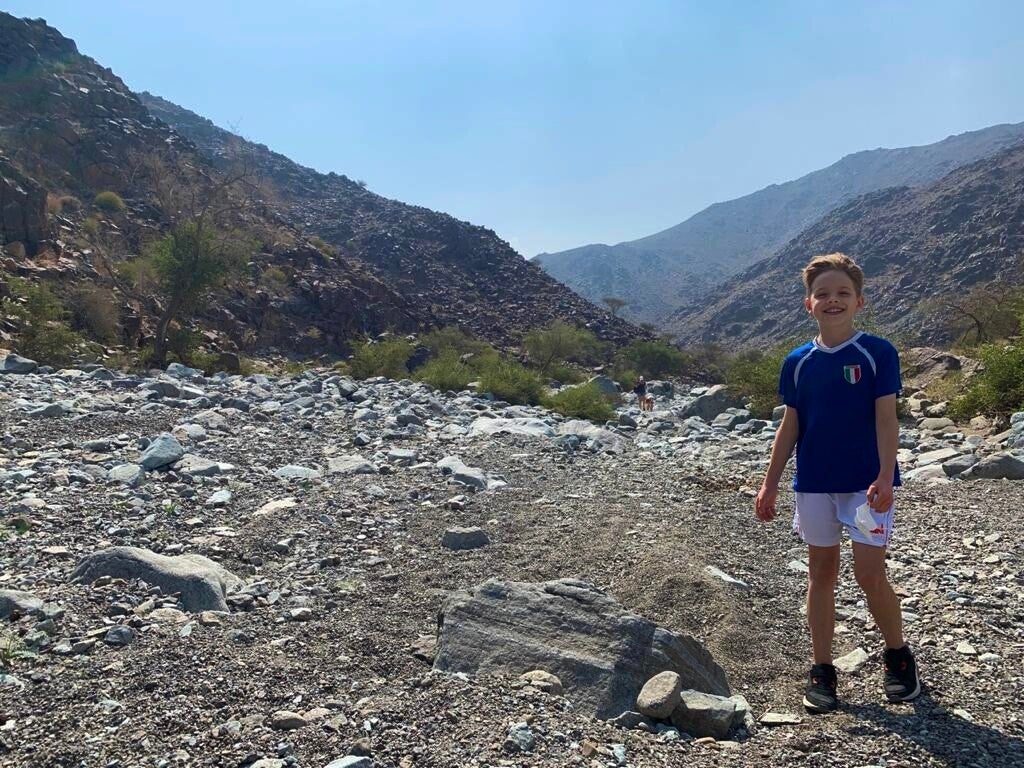
We left the car, put on our walking shoes, and set out on foot. The hike was relatively easy, with terrain made up of gravel and scattered rocks, typical of mountain valleys in the region.
After about a kilometer and a half, we reached one of the most fascinating parts of the area: an archaeological site containing the remains of an ancient village; a small, organized settlement with a roughly square layout. This layout likely reflects how the community was structured for both daily life and protection.
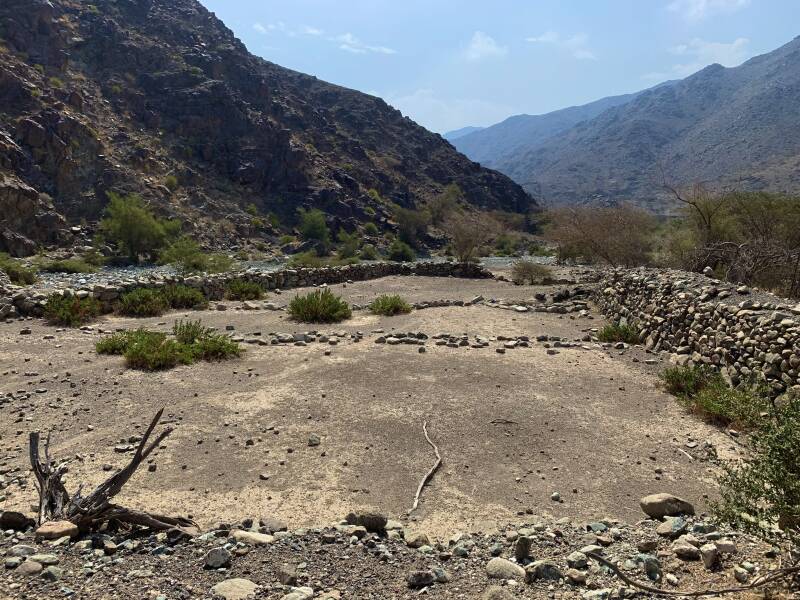
Within the settlement, we saw stone house foundations, low walls and room layouts, graves and burial sites, artifacts, and traces of human activity dating back thousands of years.
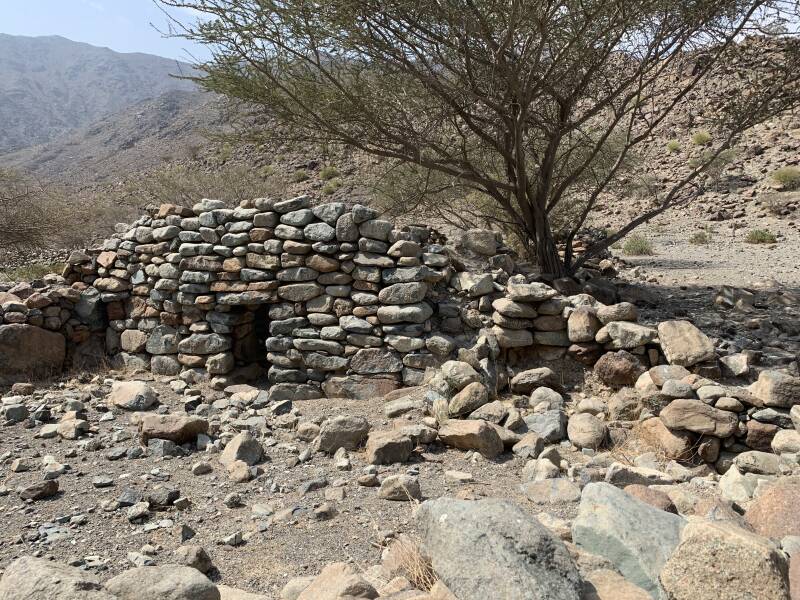
Some finds in the area even date back to the Neolithic period, demonstrating that Wadi Al Helo has been inhabited since prehistoric times. This long history highlights the importance of the valley as a water source, shelter, and connection between different regions.
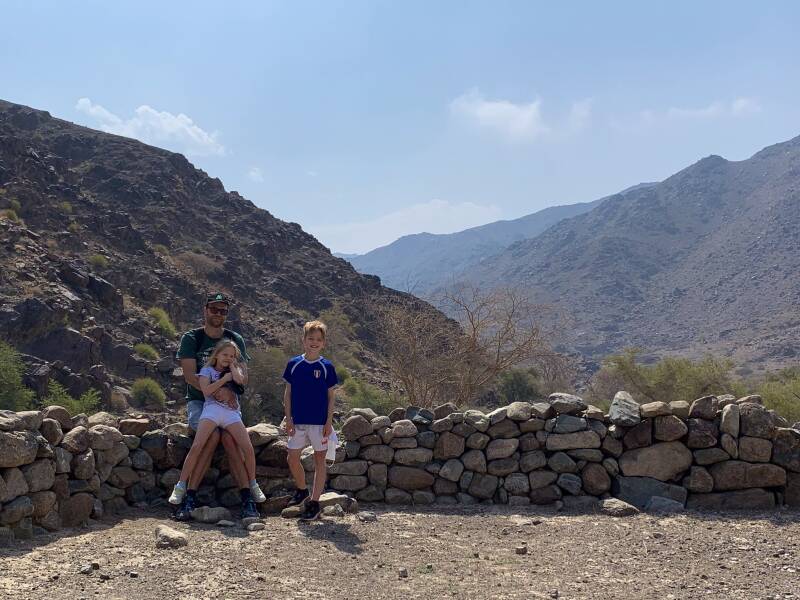
The square shape may have contributed to the creation of a central courtyard or shared space, which was common in early settlements for social activities, storage, or livestock.
All in all, the site offers a fascinating glimpse into how people lived, built, and organized their community in this mountain valley thousands of years ago.
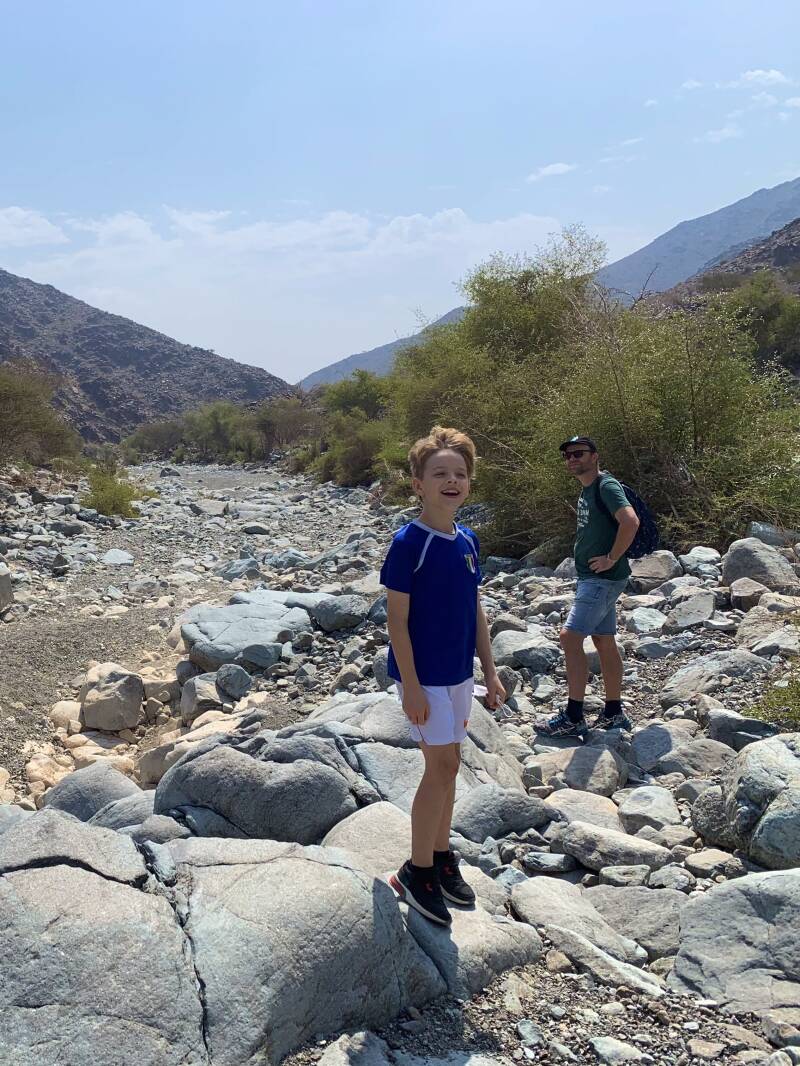
After exploring this historical site, we decided to walk back to the car the same way we came. In total, we walked about 3.75 km, including both the outward and return journey.
Awhala Fort Fujairah
We wrapped up our day with a visit to Awhala Fort, located further downstream from Wadi Al Helo. Although the fort was closed, we still spent some time exploring its exterior and taking in its historic character.
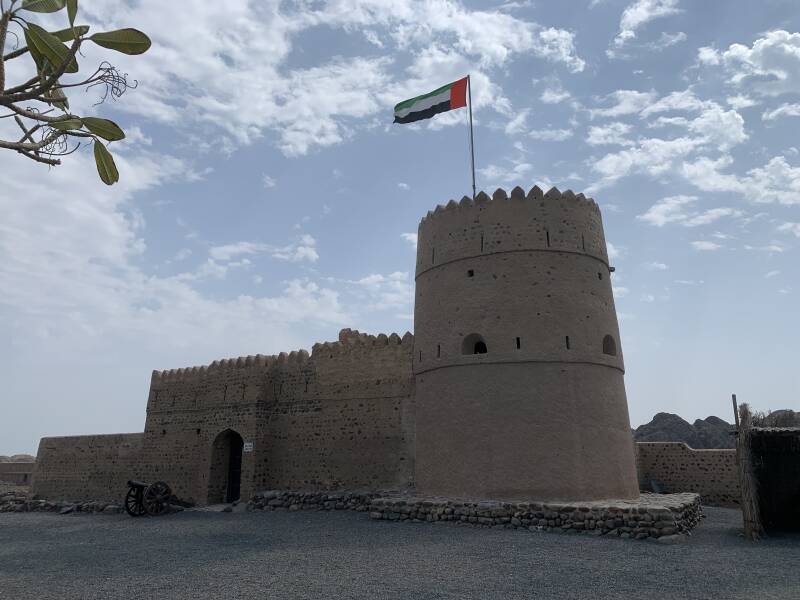
The structure itself is around 250 years old, but it stands on the foundations of a much earlier settlement dating back to the Iron Age. Archaeological discoveries in the area, including pottery sherds from the Wadi Suq period, suggest that this site has been inhabited for at least 3,000 years.

On the way back, we stopped at one of the fruit vendors along the road to buy some delicious fresh fruit. There was so much to choose from!


Create Your Own Website With JouwWeb