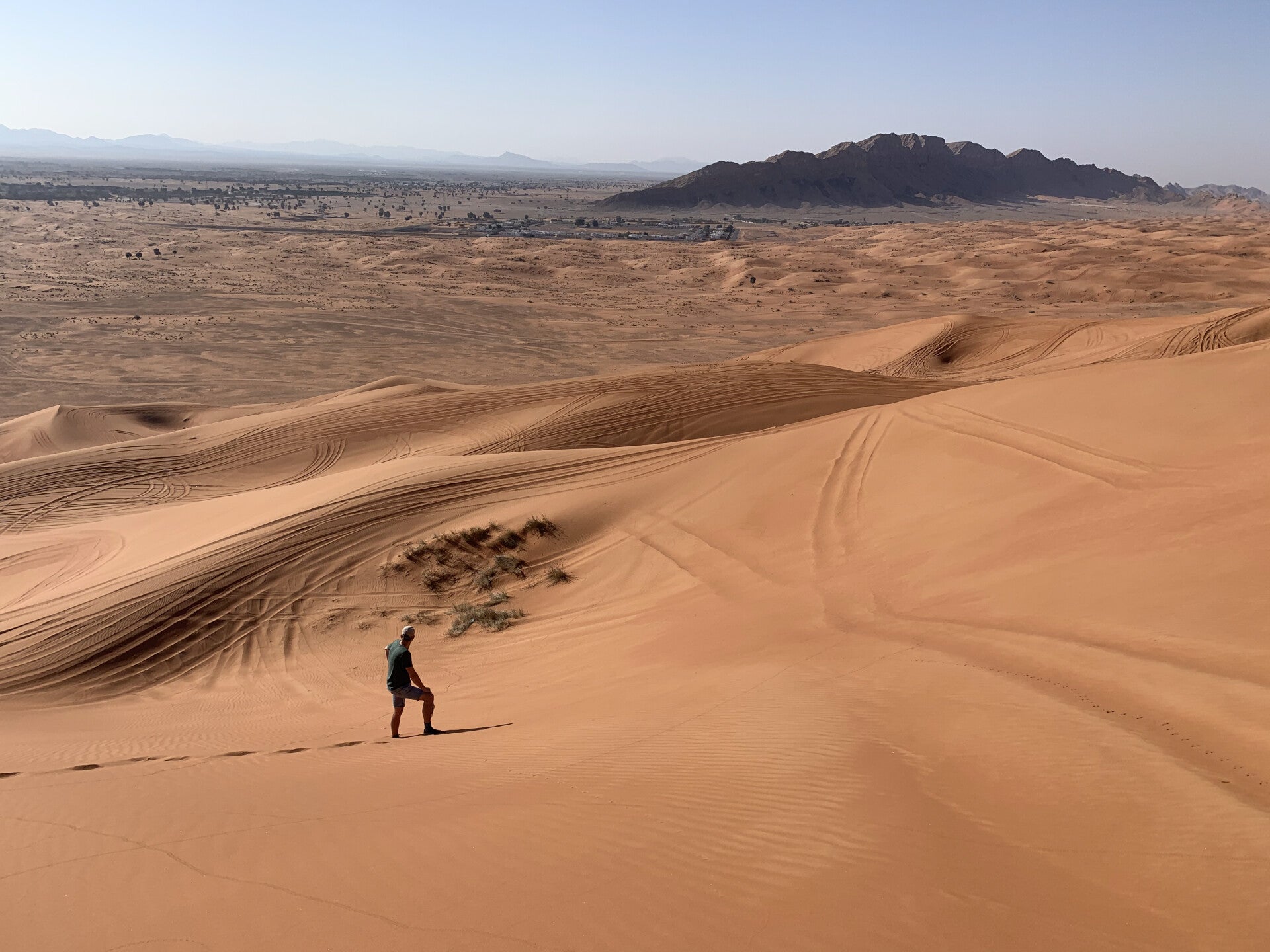
Jebel Mleiha Fossil Rock
March 2021
Fossil Rock is a striking limestone outcrop in Sharjah, famous for its ancient marine fossils and dramatic desert views at the edge of the Hajar Mountains.
Jebel Mleiha Fossil Rock Sharjah
We have driven the Sharjah–Kalba highway toward Fujairah many times, and on every trip our eyes were drawn to the imposing silhouette of Fossil Rock rising from the desert. This jagged outcrop — more accurately a massive limestone ridge — marks the gateway to the rugged Hajar Mountains, a dramatic mountain chain stretching roughly 700 kilometers from the Musandam Peninsula down along Oman’s east coast.
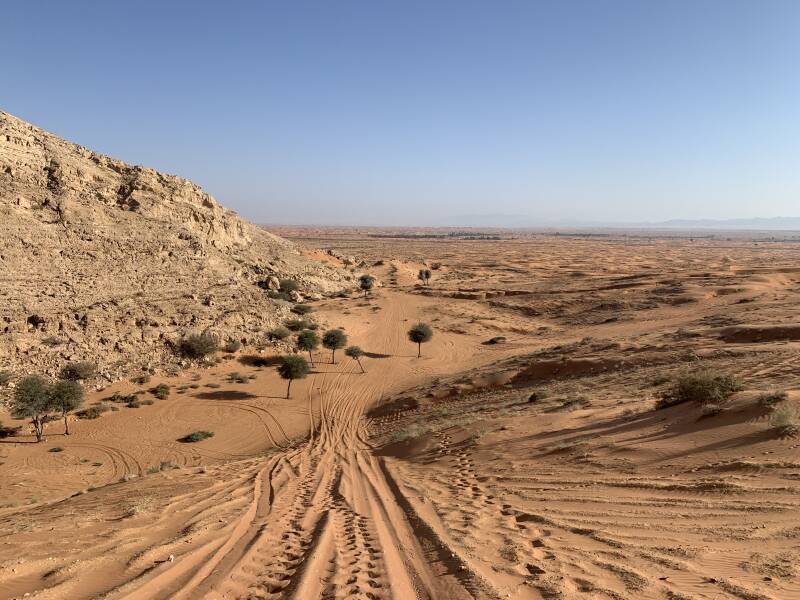
Formation of the Hajar Mountains
The Hajar Mountains were formed around 70 million years ago through intense tectonic and volcanic activity, once towering about 2,000 meters above sea level.
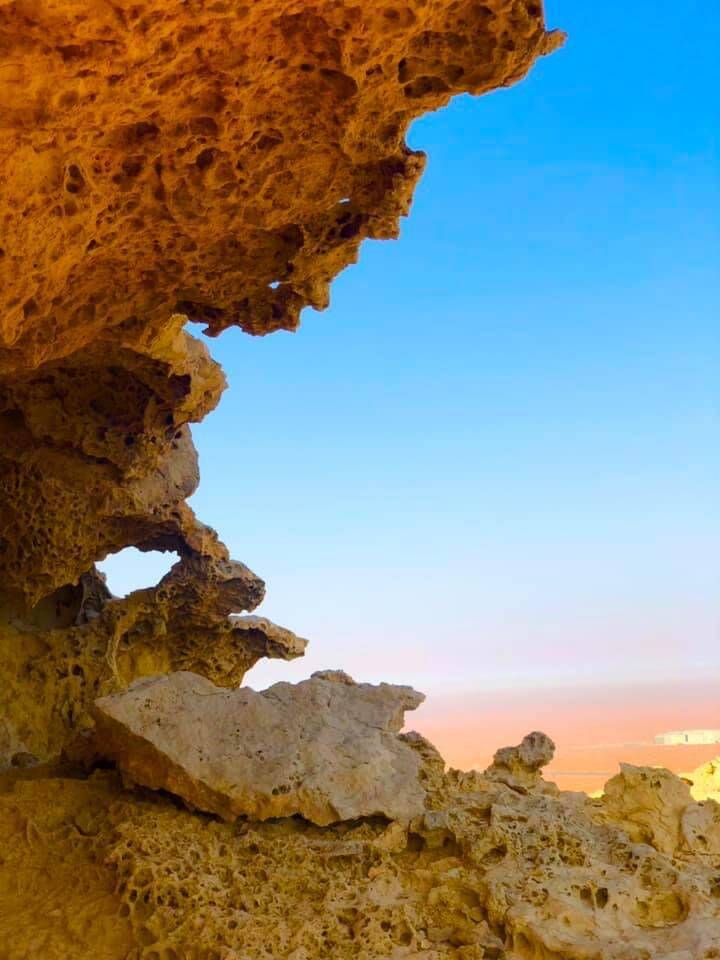
Parts of these mountains were later partially submerged beneath ancient seas — including Fossil Rock — which explains why its limestone slopes are still scattered with beautifully preserved marine invertebrate fossils. Walking there feels like stepping into a natural history museum, where the desert quietly guards secrets from millions of years ago.

This time, instead of just admiring it from the car window, we decided it was finally time to conquer this giant. The kids had other plans for the day, so it was just the two of us taking on the climb.
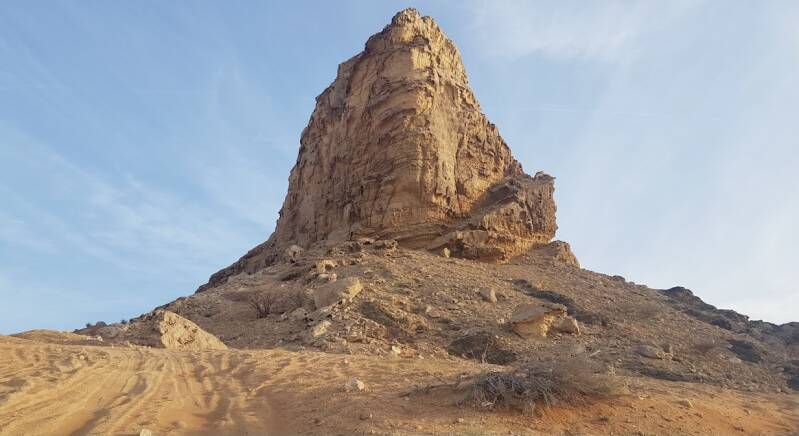
The hike was tougher than we expected — steep, rocky, and relentless under the sun — and by the time we made it back to the car, we were completely exhausted.

But reaching the top was incredibly rewarding. The views over the desert landscape were vast and raw, and the sense of achievement made every step worthwhile.

Dunebashing area
We saw many 4x4's dune-bashing. The slope of Jebel Mheila is a fun park for 4x4 enthusiasts who tear on and off ...

Desert flora & founa
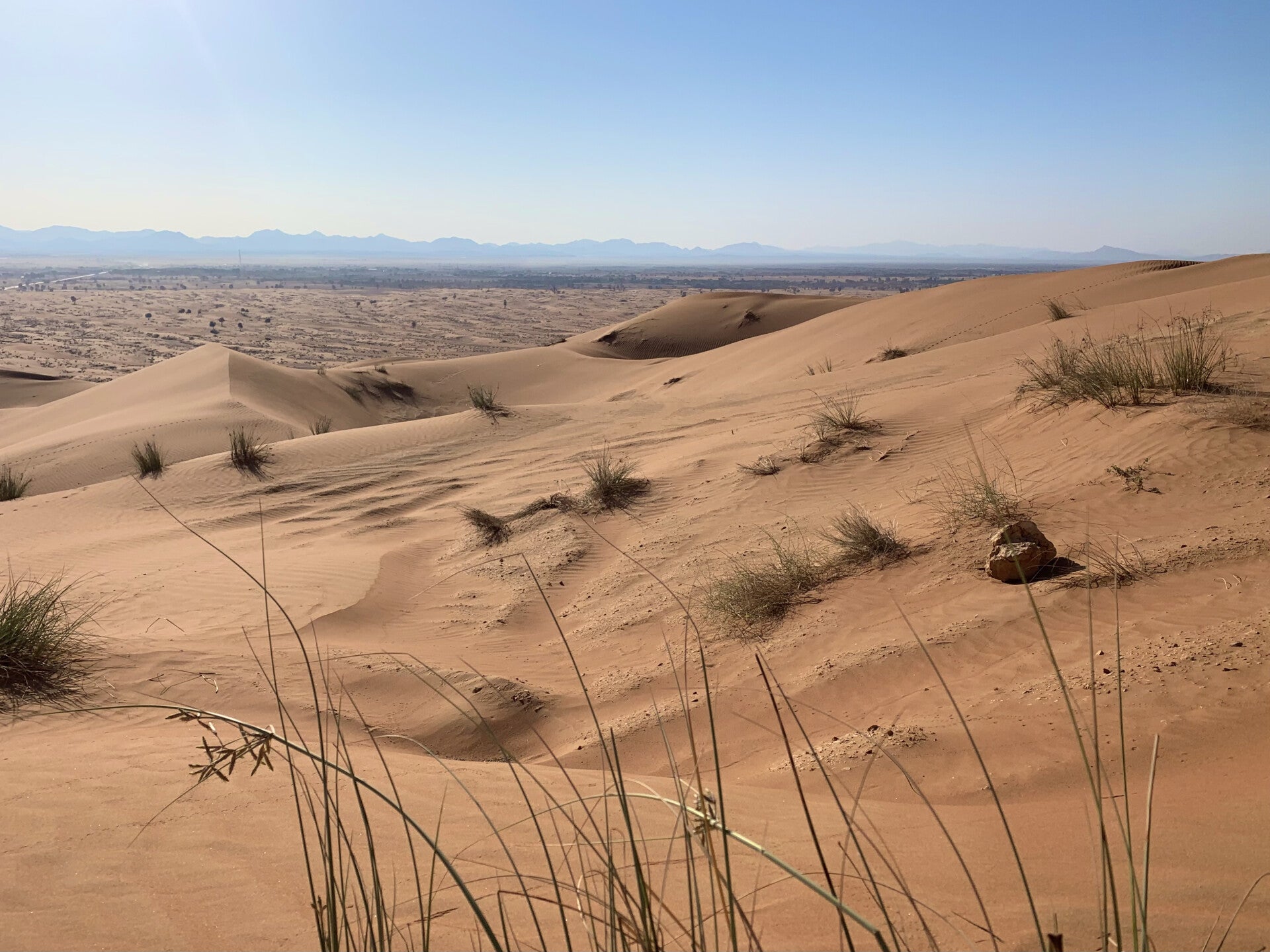
The desert around Mleiha is dotted with hardy shrubs and ghaf trees that thrive in the arid climate, their deep roots anchoring them firmly in the sandy soil.

After rare rainfall, small wildflowers briefly bloom across the landscape, adding unexpected touches of color to the otherwise rugged terrain.

In the desert around Mleiha, one of the most well-known species is the horned desert viper, a venomous snake recognized by the small horn-like scales above its eyes and its ability to sidewind across the sand.

Other species found in the UAE deserts include the saw-scaled viper and various non-venomous sand and racer snakes that are well adapted to the harsh, arid environment.
Mleiha Archaeological Site
Opened in 2016, the Mleiha Archaeological Centre presents an extensive exhibition on the history and archaeology of the area surrounding the village of Mleiha, based on discoveries made over the past four decades. The findings reveal that anatomically modern humans lived in this region between 130,000 and 120,000 years ago, highlighting its significance in early human history.

The centre itself is built around a 4,500-year-old tomb from the Umm Al Nar period of the Bronze Age, making the architecture part of the archaeological story. Mleiha is recognized as a UNESCO World Heritage Site, underlining its global cultural value.
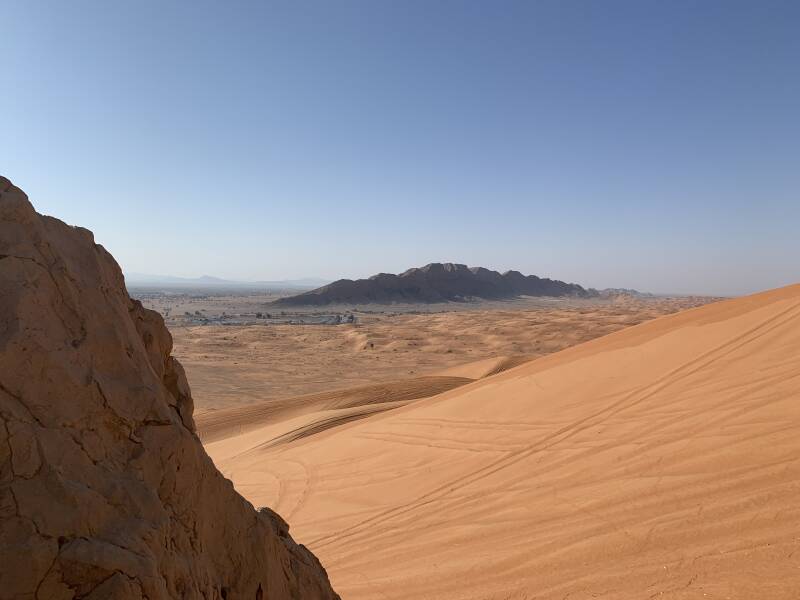
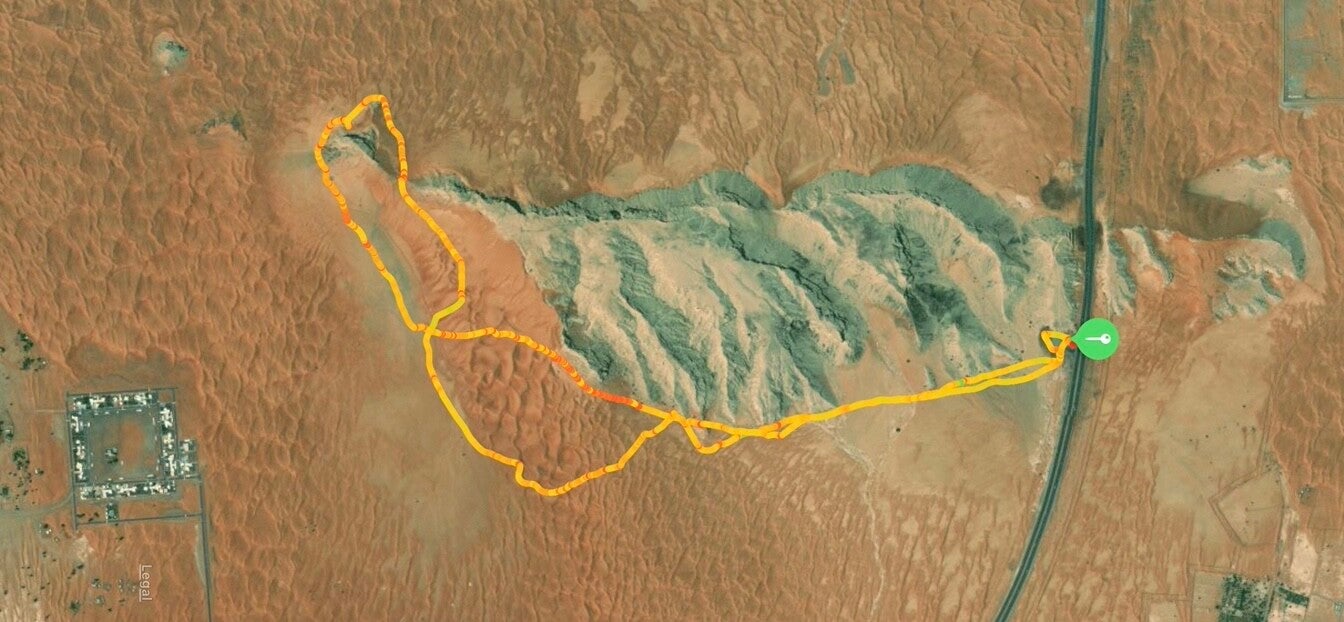
Although we did not visit the centre during our trip, we enjoyed a clear view of it while hiking nearby. Its setting is particularly striking: the village is laid out in a square settlement with predominantly white buildings, standing out beautifully against the surrounding desert landscape.
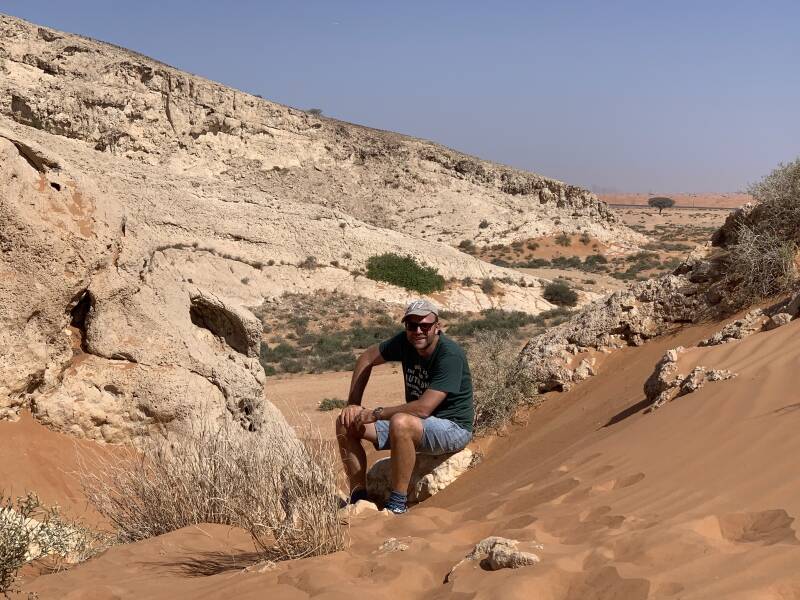
Fossil your rock!
After 9 km of trudging through the loose sand, we were completely exhausted.
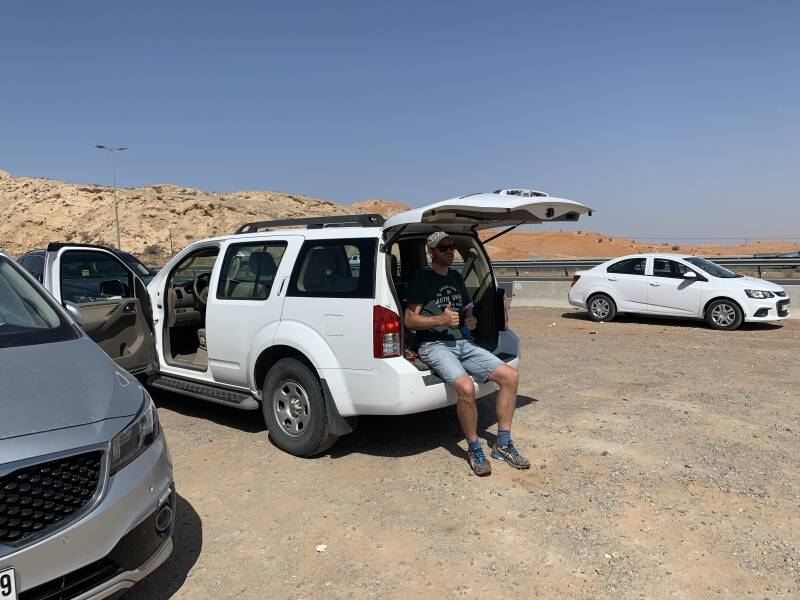
Despite the burning legs and dry throats, we felt proud: we did it!

Our first stop on the way home was a gas station, where we bought a few liters of sugary drinks to help restore the fluids in our bodies ;-) That was good!


Create Your Own Website With JouwWeb